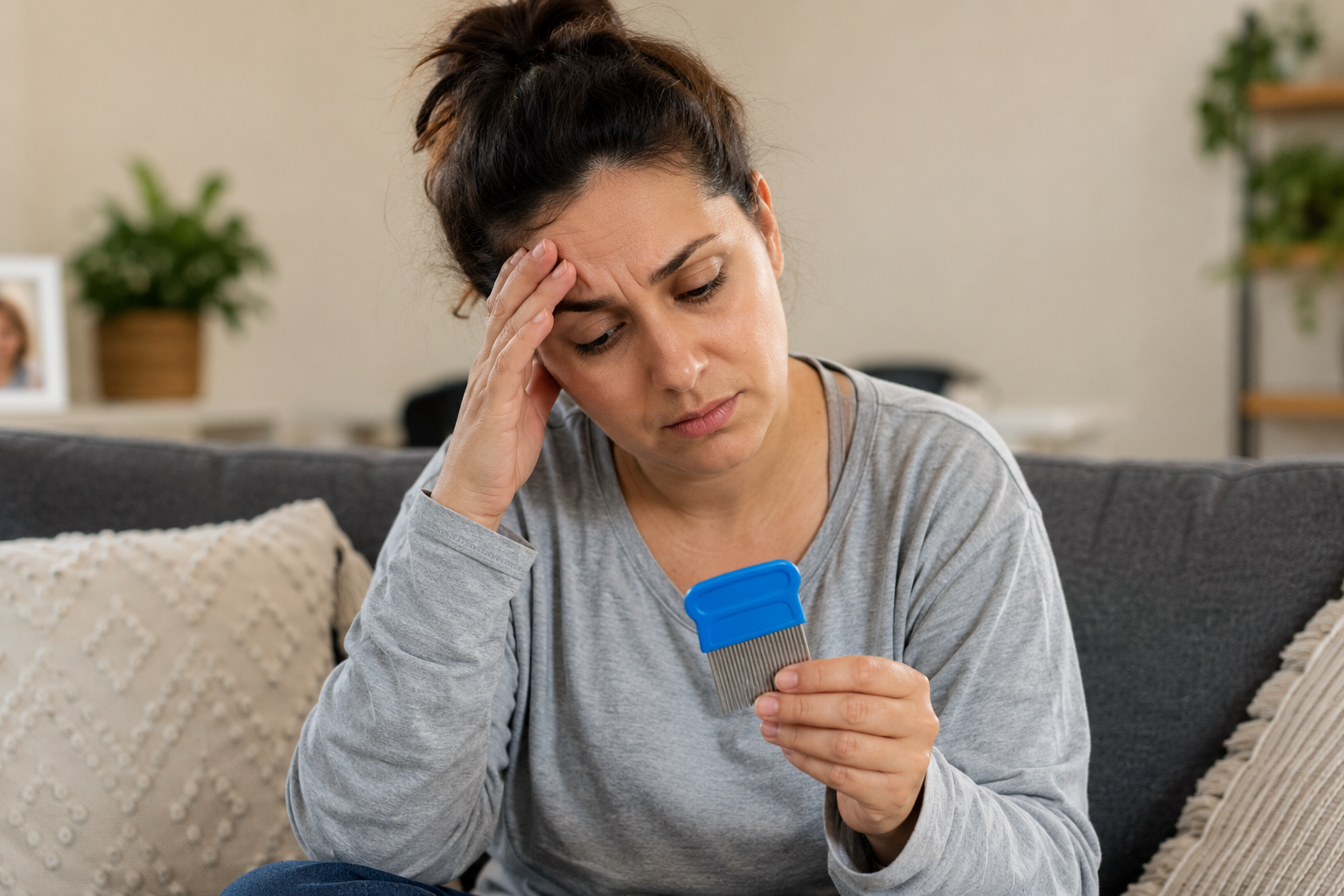
Head lice are a common yet frustrating issue, especially among school-aged children and their families. These tiny parasites can spread quickly and cause significant discomfort, but early detection and treatment can help manage and eliminate them efficiently. Knowing the signs and symptoms of a lice infestation can prevent it from worsening and spreading further. This guide explores the common indicators of head lice, how to differentiate them from other scalp conditions, and the best ways to check for an infestation.
What Are Head Lice?
Head lice (Pediculus humanus capitis) are wingless insects that live on the human scalp, feeding on blood multiple times per day. They do not transmit diseases but cause itching and irritation due to their bites. Their lifecycle consists of three stages:
- Nits (Eggs): Tiny, oval eggs laid near the scalp and attached to hair shafts. They are about the size of a pinhead and appear yellowish-white.
- Nymphs: Immature lice that hatch from nits and mature within 7–10 days.
- Adult Lice: Fully grown lice that can lay eggs and live for about 30 days on the scalp.
Since lice spread mainly through direct head-to-head contact, they are common among children who frequently play together. Although less common, lice can transfer through shared belongings such as combs, hairbrushes, hats, and bedding.
Common Signs and Symptoms of Head Lice
1. Persistent Itching
One of the most noticeable signs of a lice infestation is persistent itching, which is caused by an allergic reaction to lice saliva. This itching may develop gradually and worsen over time.
Common Areas of Itching:
- Behind the ears
- Nape of the neck
- Along the hairline
- Crown of the head
Not everyone experiences itching immediately. Some individuals, particularly those with their first infestation, may not notice symptoms for several weeks.

2. Crawling Sensation on the Scalp
Some people report feeling a tickling or crawling sensation on their scalp, which occurs as lice move through the hair. Lice are adept at evading detection, often hiding in warm, dark areas close to the scalp.
3. Red Bumps and Scalp Irritation
Repeated lice bites can lead to red bumps or small sores on the scalp, neck, and shoulders. Scratching these areas may cause additional irritation, open sores, or secondary bacterial infections.
Symptoms of Scalp Irritation:
- Small, red bumps or sores on the scalp and neck
- Crusty patches due to excessive scratching
- Swollen lymph nodes in severe cases
4. Presence of Nits (Lice Eggs)
Nits are one of the clearest indicators of an active infestation. They resemble tiny white, yellow, or tan specks and are attached firmly to the hair shaft near the scalp.
How to Identify Nits:
- Nits do not flake off like dandruff.
- They are usually located within ¼ inch of the scalp.
- A fine-toothed lice comb can help detect and remove nits.
5. Live Lice on the Scalp
Seeing live lice on the scalp is the most definitive sign of infestation. Adult lice are about the size of a sesame seed and move quickly when exposed to light.
Best way to detect live lice:
- Use a lice comb and examine hair under bright light.
- Check behind the ears and at the nape of the neck.
- Look for fast-moving, tan, or grayish-white insects.
6. Difficulty Sleeping
Lice are more active at night, which can lead to increased itching and discomfort. If your child is restless, waking frequently, or complaining of scalp irritation before bed, lice could be the culprit.
7. Excessive Scratching and Scalp Sensitivity
Constant scratching can lead to tenderness and irritation, making the scalp more sensitive to touch. This is a common sign of a worsening infestation.
8. Secondary Infections from Scratching
Repeated scratching can break the skin, making it susceptible to bacterial infections.
Signs of Infection:
- Increased redness and swelling
- Pus-filled sores
- Tenderness and warmth around affected areas
If you suspect a secondary infection, consult a healthcare provider for treatment.
9. Irritability
Another of the many symptoms of head lice is irritability. This may come as a surprise to some, but it is a common symptom, especially for those who are particularly sensitive to the sensation of bugs crawling around on their head or to the lice bites.
Increased discomfort and hypersensitivity to what is going on in the person’s head can cause them to not focus and complete tasks. Imagine trying to focus on an important task but being unable to do so because there is a constant, unknown sensation in your head.
Causes and Risk Factors of Head Lice

While any human with head hair can get head lice, certain groups may be more or less at-risk:
- Age: most cases of head lice are spread among children aged 3-11. At this age, your child has the most close contact with other people, through play, snuggling, or co-sleeping. Your school-aged child is also potentially exposed during close contact in crowded hallways between classes;
- Sex: girls catch lice more often than boys because their longer (on average) hair touches others more frequently. Girls are often socialized to hug or play with each other's hair more than boys. Adult and young adult males catch lice less often than females and children, which might be because testosterone slightly repels head lice;
- Hair texture: the curlier and coarser your hair, the less likely you are to catch lice. Lice move through the hair like monkey bars, using their claws. American lice may be more likely to have claws that can grab round straight hair shafts easier than flat curly hair shafts. A child with coarse, dry hair may also shampoo less often, leaving natural oils and products which make it harder for the head louse to glue its eggs to the hair shaft;
- Family members with lice: Lice may spread more quickly among related people since lice seem to prefer people with the same blood type they were raised on.
But still, if there is an outbreak in your household, check everyone, regardless of signs and symptoms.
How to Check for Head Lice
If you suspect head lice, follow these steps to conduct a thorough inspection:
1. Gather the Right Tools
- Fine-toothed lice comb
- Bright light or flashlight
- Magnifying glass (optional)
- White towel or tissue paper
- Conditioner (to slow down lice movement)

2. Section the Hair
Divide hair into small sections, securing each with a clip. Begin at the nape of the neck and move systematically to cover the entire scalp.
3. Look for Nits and Live Lice
- Run the fine-toothed comb through each section from root to tip.
- Wipe the comb on a white paper towel after each pass.
- Examine for nits or live lice.
4. Confirm Your Findings
If you’re unsure whether you’ve found lice, consult a healthcare professional or lice removal specialist for verification.
What Are the Complications of Head Lice?
The good news is, head lice infect only human head hair. Unlike body lice, head lice infect hair attached to a human scalp; there's no risk that head lice will spread to other human body parts, inanimate objects, or environments.
More good news: head lice don't spread diseases. All known contagious diseases caused by lice infestation are attributed to other species of lice.
The bad news is, untreated head lice may lead to other medical issues. Advanced lice may cause intense itching, and frequent scratching can lead to a skin infection. Rarely, if a child has head lice for a long time, anemia may develop, since head lice feed on human blood.
Common Misdiagnoses
Lice infestations can sometimes be mistaken for other scalp conditions. Here’s how to differentiate:
- Dandruff: White flakes that fall off easily, unlike nits which stay attached.
- Dry Scalp: Itching without the presence of nits or live lice.
- Hair Product Residue: Flakes from styling products that can be brushed away.
- Scalp Eczema or Psoriasis: Red, scaly patches causing irritation.
What to Do If You Find Lice
1. Start Treatment
Choose from various treatment options:
- Over-the-counter treatments: Medicated shampoos with permethrin or pyrethrins.
- Prescription treatments: Stronger treatments for resistant infestations.
- Natural remedies: Coconut oil, olive oil, or tea tree oil for lice suffocation.
- Professional lice removal services: Experts who manually remove lice and nits.
2. Remove Nits Manually
Even after treatment, continue using a lice comb daily for at least a week to ensure all nits are removed.
3. Clean the Home
- Wash bedding, clothing, and hats in hot water (130°F or higher).
- Vacuum carpets, furniture, and car seats.
- Soak combs and brushes in hot water for at least 10 minutes.
4. Notify Close Contacts
Inform schools, daycares, and anyone in close contact with the affected person to help prevent further spread.
When Is It Better to See a Doctor?

When over-the-counter treatments don't work, parents tend to assume they need prescription head lice medicines to treat lice. But even when you see a doctor, it is usually not enough to treat head lice, since no matter the topical treatment, you'll still need to remove the lice eggs with a fine tooth comb. Regular doctors won't remove lice eggs, but LiceDoctors will!
If head lice or products used for treating lice cause pain, fever, open sores, swelling, or severe allergic reactions on the skin, clinical dermatology may be necessary for the proper treatment of the tender skin.
Final Thoughts
Recognizing the signs and symptoms of lice infestation early can prevent prolonged discomfort and widespread infestations. Regular checks and prompt action can keep your family lice-free and stress-free.