.svg)
.svg)


Head lice. Just hearing the topic makes most people immediately start scratching their heads. We don’t all have the knowledge or experience to know what is or isn’t head lice. This may lead you to the question: Do I have lice or am I paranoid?
No one wants head lice, but for some, they represent a near phobia (or even a true phobia: Pediculophobia is the fear of lice). Just the idea that there are seemingly invisible bugs crawling on you is too horrifying to imagine. But that’s exactly what many people do. Imagine. Just reading about lice or hearing the word can make many people start scratching! Whether you need a lice treatment or not may require an expert to do a head check to see if there are visible head lice and nits.
What Should You Do If You Think You Might Have Lice
If you suspect lice, it's crucial to act quickly. Here are some tips on how to check for lice:
- Start by parting your hair into sections and thoroughly inspecting for lice or their eggs near the scalp.
- Check behind the ears, along the hairline, and at the nape of the neck.
- Look for tiny, brownish insects or small, oval-shaped eggs attached to the hair shafts.
If you're unsure or unable to find any signs of lice, our professional lice screening service is here to assist you. Our experienced technicians provide comprehensive and accurate lice checks, offering peace of mind and expert advice on appropriate head lice treatment options.
Signs That You Might Have Lice
Head lice can be a stressful and frustrating experience, especially when you’re unsure whether you have an infestation or are simply overanalyzing normal scalp sensations. If you’re wondering, "Do I have lice, or am I just paranoid?", there are specific signs that can help you determine whether you're dealing with a lice infestation. Recognizing these symptoms early is crucial for effective treatment and preventing the spread to others.
Below, we’ll expand on each major sign of a lice infestation, explain why they occur, and provide guidance on what to do if you suspect lice.
1. Persistent Itching: The Most Common Symptom of Lice
✔ Why It Happens:
Itching is one of the most noticeable and frustrating symptoms of head lice. However, not everyone with lice will experience itching right away, as it depends on how sensitive an individual is to louse saliva.
When lice bite the scalp to feed on blood, they release saliva that prevents clotting. This saliva can trigger an allergic reaction, leading to persistent itching. The degree of itching varies—some people react strongly after just a few bites, while others may take weeks to notice any discomfort.
✔ Where It Occurs Most:
- Behind the ears
- At the nape of the neck
- Around the crown of the head
- In severe infestations, itching may extend to the forehead, behind the neck, and along the hairline
✔ How Long Does It Take to Start Itching?
- If it’s your first lice infestation, itching may take 4–6 weeks to appear.
- If you’ve had previous lice infestations, itching may start within a few days due to heightened sensitivity.
✔ How to Differentiate from Other Scalp Conditions:
Lice vs. Dandruff
- Lice Itching: Caused by an allergic reaction to lice bites.
- Dandruff Itching: Caused by dry skin, which improves with moisturizing shampoos.
Lice vs. Psoriasis or Eczema
- Lice Itching: Concentrated on the scalp, behind the ears, and at the nape.
- Psoriasis/Eczema: Itchy patches appear on multiple parts of the body, not just the scalp.
2. The Feeling of Something Crawling on Your Scalp
✔ Why It Happens:
Some individuals report feeling a tickling or crawling sensation on their scalp. This is caused by the movement of live lice as they navigate through the hair. Since lice prefer warm, dark environments, they tend to stay close to the scalp and move quickly when disturbed.
✔ When Is It Most Noticeable?
- At Night: Lice are more active in the dark, making the crawling sensation more noticeable when lying in bed.
- After Showering: If you wash your hair with warm water, lice may temporarily move away from the scalp, causing a slight crawling feeling.
✔ What If I Feel Something Moving But Can’t See Lice?
If you experience a crawling sensation but don’t see lice, consider:
- Using a fine-toothed lice comb to check for lice manually.
- Examining your pillowcase in the morning for stray lice.
- Asking someone else to check the back of your head and behind your ears, as lice hide in these areas.
3. Red Bumps and Sores on the Scalp
✔ Why It Happens:
When lice bite, the scalp reacts by forming small red bumps that resemble mosquito bites. These bumps can become irritated due to scratching, leading to open sores and scabbing.
✔ How to Identify Lice Bites:
- Small, raised red bumps on the scalp.
- Clusters of tiny sores near the hairline, behind the ears, or at the nape.
- Crusty scabs due to excessive scratching.
✔ Possible Secondary Infections:
If left untreated, excessive scratching can create open wounds that become infected with bacteria. Signs of infection include:
- Pus or yellow crusting around sores.
- Swelling around bite marks.
- Warmth and tenderness in affected areas.
✔ What You Can Do:
- Apply antiseptic cream or hydrocortisone to soothe irritation.
- Avoid scratching to prevent infection.
- If you suspect an infection, consult a doctor for antibiotic treatment.
4. Presence of Nits (Lice Eggs) – The Most Reliable Indicator
✔ Why It Happens:
Lice lay eggs, called nits, which are firmly attached to individual hair strands. Nits do not move, making them easier to spot than live lice.
✔ How to Differentiate Between Nits and Dandruff:
| Feature | Nits (Lice Eggs) | Dandruff |
|---|---|---|
| Attachment | Firmly glued to hair shaft | Falls off easily when brushed |
| Color | Yellowish-white, tan, or brown | White or flaky |
| Location | Found near scalp, behind ears, at the nape | Found throughout the hair |
| Movement | Stays in place unless removed manually | Easily flakes off |
✔ Where to Look for Nits:
- Behind the ears
- At the nape of the neck
- Near the crown of the head
✔ What to Do If You Find Nits:
- Use a fine-toothed comb to check for more nits or live lice.
- If nits are found close to the scalp (¼ inch or less), the infestation is active.
- If nits are more than ½ inch from the scalp, they are likely old or hatched.
5. Live Lice on Your Scalp – The Definitive Proof
✔ Why It Happens:
If you find live lice, you have an active infestation. Unlike nits, which remain stationary, lice move quickly and avoid light, making them difficult to detect.
✔ How to Identify Live Lice:
- Size: About 2–3 mm long (size of a sesame seed).
- Color: Can range from tan, grayish-white, to brown.
- Shape: Oval body with six legs equipped with tiny claws.
- Speed: Move quickly when exposed to light.
✔ Best Methods for Finding Live Lice:
- Wet Combing:
- Apply conditioner to damp hair.
- Use a fine-toothed lice comb to section the hair.
- Wipe the comb on a white paper towel after each pass.
- Look for live lice or nymphs.
- Checking Pillowcases: Lice may fall off overnight, so inspecting your pillowcase in the morning may reveal evidence.
- Asking for Help: If you struggle to inspect your own scalp, ask a trusted friend, family member, or school nurse to check.
How to Check for Lice: A Step-by-Step Guide
Lice can be tricky to spot, especially in the early stages of an infestation. Whether you're checking your own scalp or someone else’s, thorough inspection using the right technique is key to confirming or ruling out a lice infestation.
This detailed guide will walk you through each step, including pro tips and best practices for effective lice detection.
What You’ll Need to Check for Lice
Before you begin, gather the following tools to maximize accuracy and minimize discomfort:
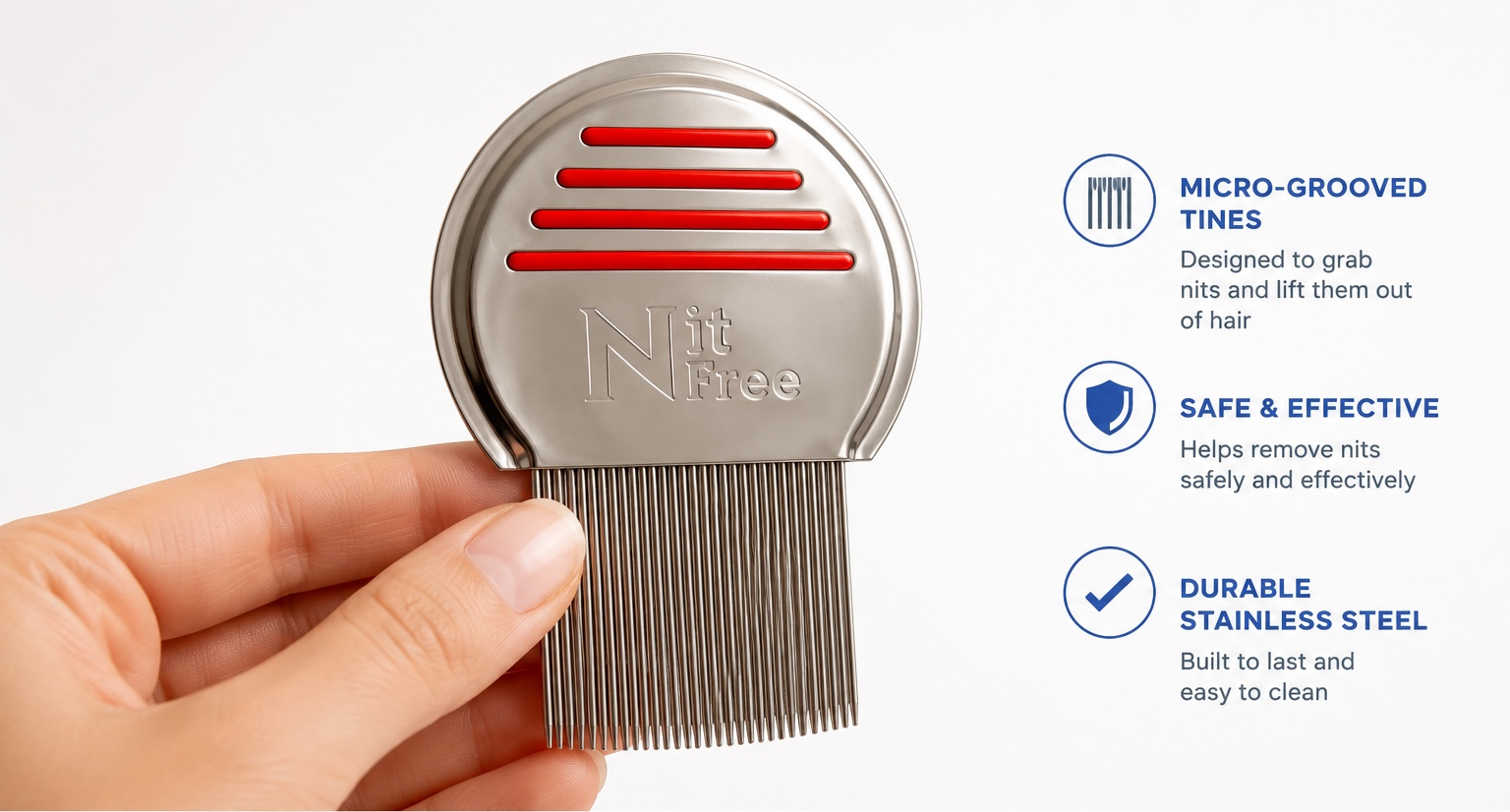
✔ Fine-toothed lice comb – Designed to capture both live lice and nits. Metal combs work best.
✔ Bright light or natural sunlight – Lice are tiny and fast-moving, so proper lighting is crucial.
✔ Magnifying glass (optional) – Helpful for spotting small nits or confirming findings.
✔ White paper towel or tissue – To wipe the comb and check for evidence of lice.
✔ Conditioner (optional but recommended) – Immobilizes lice, making them easier to comb out.
✔ Hair clips (for long hair) – Helps section the hair for a more thorough check.
Step 1: Dampen the Hair
Wetting the hair makes lice easier to see and temporarily slows their movement, preventing them from crawling away during inspection.
🔹 How to Prepare the Hair:
- Dampen the hair with water or apply a generous amount of conditioner.
- Use a wide-tooth comb to detangle the hair before beginning the inspection.
- Conditioner can trap lice in place and help loosen nits for easier removal.
📌 Pro Tip: Use a white conditioner—if lice are present, they will be more visible against the light-colored background.
Step 2: Use the Lice Comb
A fine-toothed lice comb is essential for detecting both live lice and nits. These combs have narrowly spaced teeth designed to catch tiny eggs and insects.
🔹 How to Comb for Lice Effectively:
✔ Start at the nape of the neck and behind the ears – These are lice’s favorite hiding spots due to warmth and protection.
✔ Comb in small sections – Work in a systematic manner, ensuring no area is missed.
✔ Comb from root to tip – Drag the lice comb from the scalp all the way down each hair strand.
✔ After each pass, wipe the comb onto a white paper towel and inspect for lice or nits.
📌 Pro Tip: Use slow, firm strokes to ensure the comb catches lice and eggs.
Step 3: Look for Live Lice and Nits
Once you've completed a few combing strokes, it's time to inspect the paper towel or tissue for signs of lice.
🔹 How to Identify Lice vs. Other Debris:
✔ Live Lice – Small, tan, gray, or brown insects (about the size of a sesame seed) that move quickly.
✔ Nits (Lice Eggs) – Tiny, oval-shaped eggs firmly glued to hair shafts near the scalp.
✔ Dandruff or Hair Product Residue – Flakes that easily fall off (unlike nits, which remain attached).
📌 Pro Tip: Use a magnifying glass if you're unsure whether a speck is a nit or just dandruff.
Step 4: Repeat the Process on the Entire Scalp
Lice don’t stay in one place, so checking the whole head is necessary to rule out false alarms.
🔹 How to Ensure a Thorough Lice Check:
✔ Work in sections – Divide hair into four sections and inspect each one carefully.
✔ Recheck common hiding spots – Pay extra attention to the nape of the neck, behind the ears, and the crown of the head.
✔ Repeat the combing process at least two times per section to ensure no lice or eggs are missed.
📌 Pro Tip: Checking twice can help catch lice that may have moved away during the first round of combing.
Step 5: Confirm the Findings
Once you’ve finished combing, you need to determine whether the infestation is active, recent, or not present at all.
🔹 Signs That Lice Are Present:
✔ Live lice found = Active infestation.
✔ Nits within ¼ inch of the scalp = Active infestation or very recent exposure.
✔ Nits more than ½ inch away from the scalp = Possible old infestation, as hair growth pushes old eggs further from the scalp.
🔹 Signs That You Do NOT Have Lice:
✔ No live lice found after multiple thorough comb-throughs.
✔ Only white, flaky debris that falls off easily (likely dandruff).
✔ No new nits close to the scalp, indicating no active infestation.
📌 Pro Tip: If you are unsure about your findings, take photos with your phone and compare them to online lice identification guides.
What to Do If You Find Nits But No Live Lice
Sometimes, nits remain in the hair after an infestation has already been treated. Here’s how to determine if lice are still active:
✔ New nits close to the scalp? → Possible active infestation. Continue monitoring.
✔ Old nits far from the scalp? → Likely a past infestation. No treatment needed unless live lice appear.
✔ No live lice found after multiple checks? → No action needed. Continue checking weekly as a precaution.
📌 Pro Tip: If lice keep reappearing, it may be due to reinfection from untreated contacts (family, classmates, or friends).
What to Do If You DON’T Find Lice But Still Feel Itchy
If no lice are found but the itching persists, consider other possible causes:
✔ Dandruff or dry scalp – Try moisturizing shampoos and avoid over-washing.
✔ Allergic reactions to hair products – Stop using new products to rule out irritation.
✔ Scalp psoriasis or dermatitis – Consult a dermatologist if symptoms persist.
✔ Psychosomatic itching – Anxiety about lice can cause an imaginary crawling sensation.
📌 Pro Tip: If the itching disappears when distracted, it’s likely psychosomatic rather than lice-related.
What Could Be Causing Your Head to Itch Without Lice?

So you’ve had your head checked and re-checked and now you wonder why is my hair so itchy but no lice are there? Then why does your head itch if you don't have lice? Here are a few reasons:
- Dandruff: This is a condition of the scalp that everyone gets. It causes itching resulting in flaking off of the scalp.
- Weather: Weather conditions can suck the moisture out of your skin, making you itch. Hot humid weather can make you sweat which can build up on your scalp and also make you itch.
- New hair treatments: If you’ve started a new hair care regimen, your skin may be sensitive to the new products. If you’ve recently had your hair colored permed or treated, those salon chemicals can have a very drying effect.
- New laundry products: It’s possible if you’ve changed from your regular products that your clothes or bedding are making you itch.
- Head lice treatments. Unfortunately, most of the products that are available over the counter or by prescription are by design and necessity, harsh. These are known to dry out the scalp – which again, makes you itch. Even if you haven’t used any chemical products, just the simple act of excessive physical combing (and rubbing and poking and prodding and pulling) can irritate the scalp, and you guessed it – make you itch after lice treatment.
- You may have scalp psoriasis or dry scalp which requires proper treatment and possibly medication from a doctor.
Lice infestations are a stressful experience, and for many people, simply hearing about lice can trigger an intense fear of infestation—even when there are no actual lice present. This is often referred to as lice paranoia or psychosomatic itching, where the sensation of crawling or itching is caused by psychological stress rather than a real infestation.
If you've checked your scalp and haven’t found live lice or nits, it’s possible that another condition is causing your symptoms. Here’s a closer look at common conditions that can mimic a lice infestation, along with tips on how to tell the difference between lice and other scalp issues.
1. Dandruff or Dry Scalp: The Most Common Mistaken Condition
✔ Why It Happens:
Dandruff (seborrheic dermatitis) and dry scalp both cause flaky skin that can lead to itching and irritation, making it one of the most common false alarms when people suspect lice.
✔ How to Tell the Difference Between Dandruff and Lice:
| Feature | Dandruff (Dry Scalp) | Lice & Nits |
|---|---|---|
| Appearance | White or yellow flakes, uneven in shape | Small, oval eggs that are yellowish, white, or tan |
| Attachment | Falls off easily when touched | Firmly attached to the hair shaft near the scalp |
| Location | Throughout the scalp and hair | Usually found behind the ears and at the nape of the neck |
| Response to Moisture | Improves with moisturizing shampoos | No improvement with dandruff treatments |
✔ How to Confirm It’s Dandruff, Not Lice:
- Use a fine-toothed comb to check for lice. If no lice or sticky nits are present, it’s likely dandruff.
- Try a moisturizing anti-dandruff shampoo for a few days—if symptoms improve, lice are not the cause.
2. Product Buildup or Allergic Reactions
✔ Why It Happens:
Many shampoos, conditioners, and styling products leave behind residue, which can create white flakes or a waxy buildup on the scalp. Some people also have allergic reactions to certain hair care ingredients, leading to itching and irritation that mimics lice symptoms.
✔ How to Tell the Difference Between Product Buildup and Lice:
- Product residue will wash out with clarifying shampoo.
- If itching occurs immediately after using a new hair product, it may be an allergic reaction, not lice.
- Unlike lice eggs (nits), product buildup is not attached to the hair shaft and can be rinsed away.
✔ What to Do If You Suspect Product Buildup:
- Try washing your hair with a clarifying shampoo to remove buildup.
- If the itching persists, stop using new products to rule out an allergic reaction.
- If you see sticky eggs attached near the scalp, you may still need to check for lice.
3. Seborrheic Dermatitis or Scalp Psoriasis
✔ Why It Happens:
Seborrheic dermatitis and scalp psoriasis are chronic skin conditions that cause red, flaky, and itchy patches on the scalp. These conditions often worsen with stress, cold weather, or harsh hair products.
✔ How to Tell the Difference Between Scalp Psoriasis and Lice:
| Feature | Seborrheic Dermatitis / Psoriasis | Lice & Nits |
|---|---|---|
| Appearance | Red, scaly patches with thick skin buildup | Small, tan or white lice moving on scalp |
| Location | Commonly appears along hairline, forehead, and back of the neck | Found behind the ears and nape of the neck |
| Response to Treatment | Improves with medicated shampoos | Lice infestation worsens over time if untreated |
| Itching Pattern | Can come and go, worsens with dry skin | Worsens over time due to lice bites and increased infestation |
✔ What to Do If You Suspect a Scalp Condition:
- Try medicated anti-itch shampoos like coal tar, salicylic acid, or ketoconazole.
- If the red patches persist, visit a dermatologist for diagnosis.
- Unlike lice, scalp psoriasis does not involve moving insects or sticky nits attached to hair.
4. Psychosomatic Itching (Lice Paranoia): The Power of Suggestion
✔ Why It Happens:
If you’ve recently heard about lice outbreaks, you might start feeling itchy even if you don’t have lice. This is called psychosomatic itching, where the fear of lice causes the brain to send signals that mimic real lice symptoms.
✔ Common Triggers of Lice Paranoia:
- Hearing about lice at school or work.
- Seeing someone scratch their head.
- Past traumatic experience with lice.
- Reading about lice infestations online (like you are now!).
✔ How to Tell the Difference Between Lice Paranoia and a Real Infestation:
| Feature | Lice Infestation | Psychosomatic Itching |
|---|---|---|
| Itching Intensity | Gradually worsens as lice multiply | Sudden, temporary itching that fades |
| Location of Itching | Focused behind ears, nape of the neck, crown | Random itching all over the scalp |
| Worsens at Night? | Yes, lice are more active at night | No, usually the same throughout the day |
| Can You Find Lice? | Yes, with a lice comb | No lice or eggs present |
✔ What to Do If You Think It’s Just Paranoia:
- Check with a lice comb—if nothing is there, you’re likely fine.
- Try distraction techniques—if the itching stops when you’re focused on something else, it’s not lice.
- Wash your hair with a cooling mint or tea tree shampoo—if relief is instant, it’s probably just irritation.
5. Static Electricity or Fuzzy Sensations in Hair
✔ Why It Happens:
Hair can feel ticklish or tingly due to static electricity, weather changes, or certain fabrics. Some people mistake this sensation of movement for lice crawling.
✔ How to Tell the Difference Between Static and Lice:
✔ What to Do If You Suspect Static:
- Use an anti-static spray on your hairbrush.
- Try moisturizing your hair with leave-in conditioner.
- If itching continues after addressing static, recheck for lice.
Can Lice Be Psychosomatic?

Yes, lice can be psychosomatic, meaning that the symptoms experienced are influenced by psychological factors. An interesting observation is that when discussing the topic of lice, people often start scratching their heads. This phenomenon, commonly known as "phantom lice," is an emotional response triggered by being near someone who has lice or is even just talking about it. It's based on a heightened awareness of what is happening on the hair shaft near the scalp.
The mind-body connection plays a significant role in this experience. Our brain can create a vivid mental image of lice crawling on our scalp, which can trigger a physical response such as itching. Although there may not be any actual lice present, the association between lice and itching is so strong that our thoughts and emotions can influence our physical sensations.
The psychosomatic experience of lice-related itching is a result of the power of suggestion and our heightened awareness. Even without the presence of an actual lice infestation, thinking or talking about lice can evoke genuine itching sensations due to the strong association between lice and itchiness.
How to Combat a Case of Psychosomatic Itching Lice?

You can also experience phantom itching after lice. If you are experiencing this symptom after you have been treated properly, you may be asking yourself is it lice or am I paranoid? When we speak with clients who are experiencing this, we understand it is important to reassure them that this is entirely normal.
Here are a few practical tips to stop being paranoid about lice:
- Stick with your follow-up lice treatment.
- Be patient – the farther away from the infestation you get, the farther away from your mind lice will be.
- Resist the urge to scratch – scratching begets itching, then scratching – it’s a vicious cycle! If you have been vigorously scratching your head, there may be sores on the skin that cause itchy signs of head lice.
- Know that you need a full-blown infestation for lice to be the root cause of itching. You have just been treated so there is no way that you have a full-blown infestation.
- Realize that dermatitis and dandruff can cause itchy symptoms.
Get Effective Solutions for Lice Issues: Contact LiceDoctors Today!
If you are worried that you have head lice or experience intense itching, you may have a case of head lice and we are here to help. If you are wondering how to know if you have lice or are just paranoid, contact LiceDoctors for expert assistance. Our competent professionals will perform a thorough lice check to determine the situation, and if needed, provide effective lice treatment. With LiceDoctors, you can trust our expertise to alleviate your worries. Take the first step, book an appointment, and regain your peace of mind. Trust us for professional solutions and restful nights. Call 800-224-2537 for peace of mind. Because knowing the truth will help you sleep at night again.