.svg)
.svg)


Nit removal is the systematic process of extracting head lice eggs from hair using fine-toothed combs and manual inspection, critical for families dealing with lice infestations. Complete nit removal requires examining every strand within 1/4 inch of the scalp, because even two remaining nits can restart the entire lifecycle. This guide covers permanent elimination through thorough egg removal, proper combing technique, and understanding why incomplete removal causes reinfestation.
Head lice affect approximately 6-12 million children annually in the United States, with nits (lice eggs) being the primary cause of recurring infestations. Understanding proper nit removal technique is essential because nits hatch within 7-10 days, creating a continuous cycle if not completely eliminated.
Quick Answer
Complete nit removal requires systematic combing with a fine-toothed metal nit comb through small sections of damp hair, removing every egg within 1/4 inch of the scalp. Incomplete removal causes reinfestation because viable nits hatch within 7-10 days, restarting the lice lifecycle and requiring repeated treatment.
Key Facts
- Nit hatching time: 7-10 days
- Critical removal zone: 1/4 inch from the scalp
- Lice lifecycle duration: 30-35 days
- Annual U.S. cases (children): 6-12 million
Key Takeaways
- Use a metal nit comb on damp hair in 1/4-inch sections for thorough removal.
- Nits within 1/4 inch of the scalp are viable and must be completely removed.
- Incomplete removal leaves eggs that hatch in 7-10 days, restarting the infestation.
- Manual nit picking combined with combing achieves up to 57% cure rates versus treatment alone.
- Check hair in bright natural light to distinguish viable nits from debris.
Table of Contents
- How to Remove Nits Completely: Step-by-Step Guide
- Why Incomplete Nit Removal Causes Lice to Return
- Best Tools and Techniques for Thorough Nit Removal
- How to Tell If Nits Are Dead or Still Viable
- Natural vs. Chemical Methods for Complete Lice Elimination
- Preventing Reinfestation After Nit Removal
- How LiceDoctors Addresses Complete Nit Removal Challenges
How to Remove Nits Completely: Step-by-Step Guide
Direct Answer: Complete nit removal requires dividing damp hair into small sections, using a fine-toothed metal comb from scalp to hair ends, and manually inspecting each strand within 1/4 inch of the scalp. This process takes 1-3 hours depending on hair length and thickness, and must be repeated every 3-4 days for two weeks.
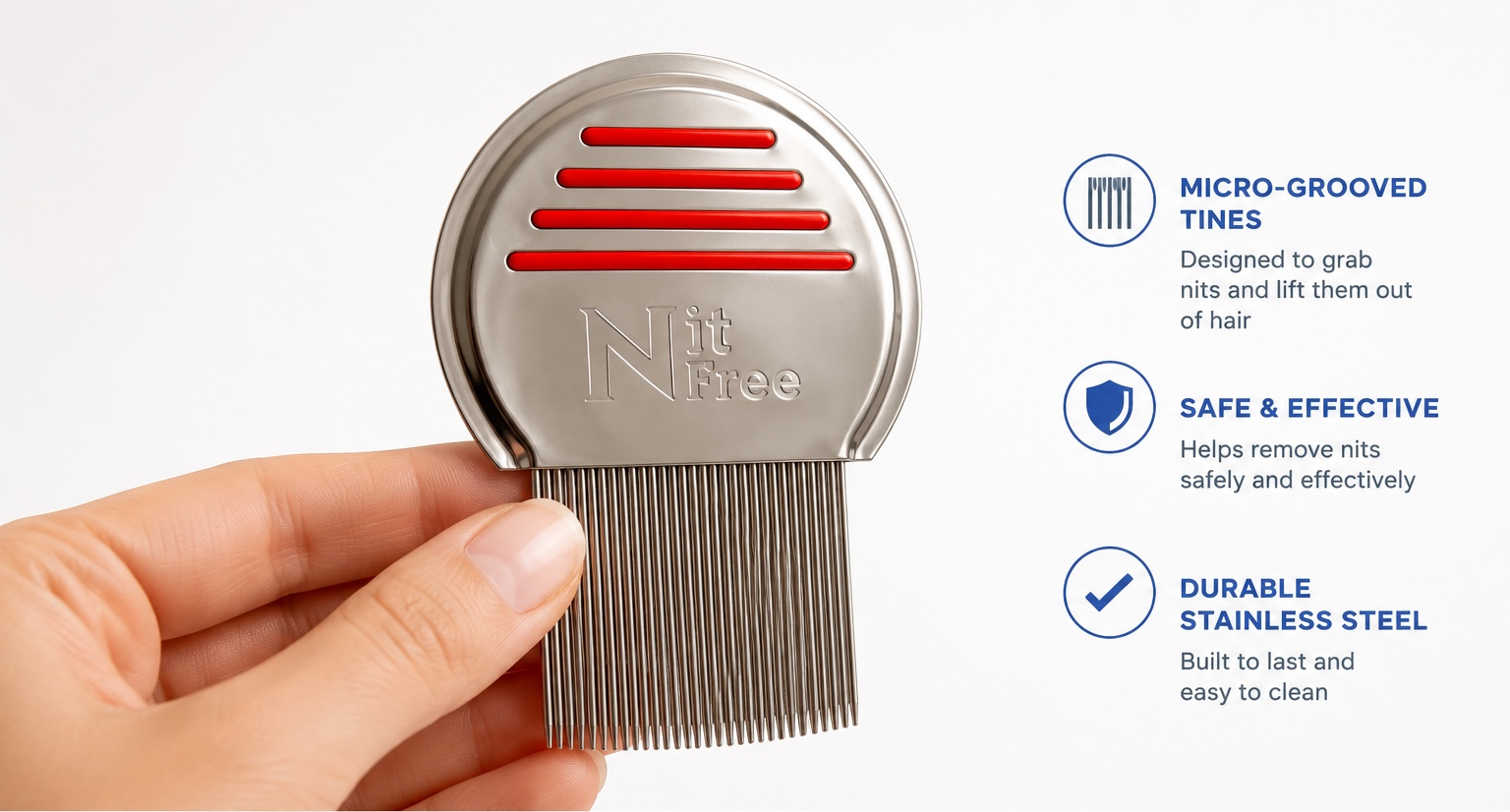
The foundation of effective nit removal begins with proper preparation. Apply conditioner or oil to damp hair to slow lice movement and make combing easier. According to clinical guidelines, dividing hair into 1/4-inch sections ensures no area is missed during the combing process. Use a metal nit comb with teeth spaced 0.2-0.3mm apart, as these remove significantly more nits than plastic alternatives.
Start at the scalp and comb through to the hair ends, wiping the comb on a white paper towel after each stroke to monitor progress. The CDC recommends combing the entire head at least twice during each session. Pay special attention to areas behind the ears and at the nape of the neck, where 60-70% of nits are typically found. After combing, manually inspect each section under bright light, removing any remaining nits with fingernails or fine tweezers.
Repeat this entire process every 3-4 days for at least two weeks. Research shows that wet-combing alone achieves 57% cure rates when performed consistently, compared to single treatments. The key is persistence: missing even one viable nit can restart the infestation cycle within 7-10 days when that egg hatches.
- Divide damp, conditioned hair into 1/4-inch sections for systematic coverage.
- Use a metal nit comb with 0.2-0.3mm spacing from scalp to ends.
- Wipe the comb on a white paper towel after each stroke to track removal.
- Manually inspect and remove remaining nits under bright light.
According to a UK clinical trial, systematic wet-combing performed every 3-4 days achieved a 57% cure rate without any chemical treatment, demonstrating the power of thorough mechanical removal.
Why Incomplete Nit Removal Causes Lice to Return
Direct Answer: Incomplete nit removal causes reinfestation because viable nits hatch within 7-10 days, releasing new lice that mature and reproduce within 30-35 days. Just two remaining nits can restart the entire lifecycle, requiring families to repeat treatments indefinitely.
The lice lifecycle explains why thorough nit removal is non-negotiable. Female lice lay 6-10 eggs daily, cementing them to hair shafts near the scalp where warmth facilitates hatching. These nits incubate for 7-10 days before releasing nymphs, which mature into breeding adults within 9-12 days. A single missed nit can therefore produce a new generation of lice within three weeks.
Nits located within 1/4 inch of the scalp are viable because they receive sufficient warmth from body heat to develop. Eggs farther from the scalp are often dead or non-viable, but distinguishing them requires careful inspection. The Canadian Paediatric Society notes that many treatment failures occur not from pesticide resistance, but from incomplete egg removal followed by hatching of surviving nits.
This cycle creates the frustrating pattern families experience: initial treatment kills adult lice, but within 7-10 days, new lice appear from hatched eggs. Without removing every nit, the 30-35 day lifecycle continues indefinitely, requiring repeated chemical treatments that can damage hair and contribute to resistance.
According to the Canadian Paediatric Society, most treatment failures result from incomplete nit removal rather than pesticide resistance, as surviving eggs hatch within 7-10 days and restart the infestation.
Best Tools and Techniques for Thorough Nit Removal
Direct Answer: Metal fine-toothed nit combs with 0.2-0.3mm spacing, magnifying glasses, and bright natural light are essential tools. Combining wet-combing with conditioner and manual nit-picking achieves the highest removal rates, with professional-grade combs removing up to 90% more nits than standard plastic combs.
Tool selection dramatically impacts removal success. Metal combs with laser-cut teeth spaced 0.2-0.3mm apart are the gold standard, as they trap nits that slip through plastic combs with wider spacing. Research comparing comb types found that professional metal combs remove significantly more nits per stroke than drugstore alternatives. Look for combs with long, spiral-grooved teeth that catch eggs at multiple angles.
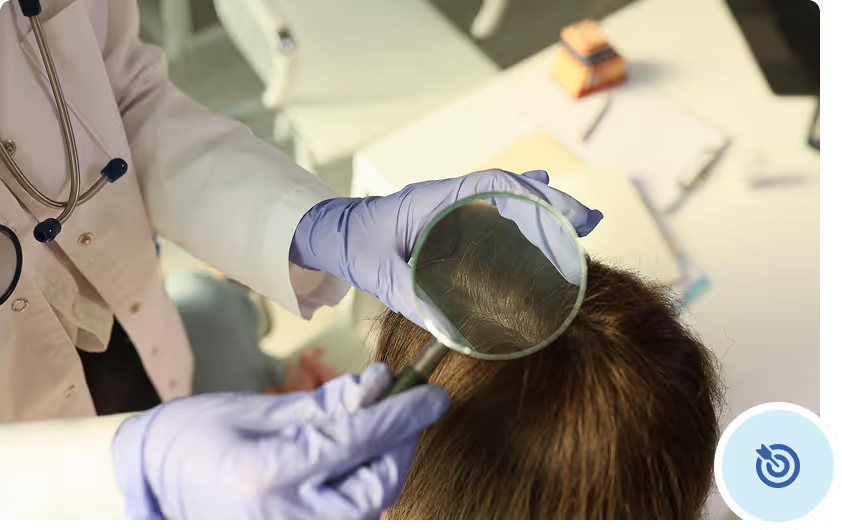
Lighting and magnification are equally critical. Canadian guidelines recommend examining hair in bright natural sunlight or using a high-intensity lamp, as nits are translucent and easily missed in dim light. A magnifying glass helps distinguish viable nits (tan or coffee-colored, within 1/4 inch of the scalp) from debris, dandruff, or dead eggs (white, farther from the scalp).
Technique matters as much as tools. Apply generous conditioner or oil before combing to immobilize lice and lubricate hair. Comb from multiple angles, vertical, horizontal, and diagonal, to catch nits cemented at different orientations. After combing, section hair with clips and manually inspect each strand, using fingernails to scrape off stubborn nits. This two-phase approach, mechanical combing followed by manual inspection, achieves the thoroughness that clinical trials show prevents reinfestation.
According to international lice control recommendations, metal combs with 0.2-0.3mm tooth spacing remove up to 90% more nits than plastic combs, making tool selection critical for treatment success.
How to Tell If Nits Are Dead or Still Viable
Direct Answer: Viable nits appear tan, brown, or coffee-colored and are located within 1/4 inch of the scalp, while dead or hatched nits are white or translucent and often farther from the scalp. Viable nits feel firmly cemented to the hair shaft and require scraping to remove.
Color and location are the primary indicators of nit viability. Live, unhatched nits have a tan to brown color because they contain developing lice embryos. The CDC notes that nits within 1/4 inch of the scalp are likely viable because they receive the warmth needed for development. Dead or already-hatched nits appear white or clear, as the embryo is gone, and are often found farther down the hair shaft as hair grows.
Texture provides additional clues. Viable nits are firmly glued to the hair shaft with a cement-like substance that requires significant force to remove; they won't slide off with gentle pulling. Empty nit casings may feel slightly softer and can sometimes be moved along the hair shaft. Under magnification, viable nits show a distinct oval shape with a small cap (operculum) at one end, while hatched nits have an open cap where the nymph emerged.
Science magazine reported that some nits can delay hatching up to 14 days under suboptimal conditions, meaning even older-looking nits may still be viable. This is why clinical protocols recommend removing all nits regardless of appearance, rather than trying to distinguish viable from non-viable eggs. When in doubt, remove it. The only truly safe nit is one that has been physically extracted from the hair.
According to research published in Science, some lice eggs can delay hatching up to 14 days under suboptimal conditions, meaning even older-appearing nits may still be viable and require removal.
Natural vs. Chemical Methods for Complete Lice Elimination
Direct Answer: Chemical treatments show 75-95% effectiveness against live lice but don't kill nits, requiring follow-up combing. Natural methods like wet-combing with conditioner achieve 57% cure rates without chemicals, while suffocation agents show variable results. Both approaches require thorough nit removal for complete elimination.
Chemical pediculicides fall into two categories: over-the-counter products (permethrin, pyrethrin) and prescription treatments (malathion, ivermectin). The New England Journal of Medicine found that oral ivermectin achieved 95% cure rates compared to 85% for malathion lotion. However, no chemical treatment kills all nits, and resistance to permethrin has been documented in numerous countries, reducing effectiveness to as low as 25% in some regions.
Natural approaches center on mechanical removal and suffocation. Wet-combing with conditioner, performed every 3-4 days for two weeks, showed 57% effectiveness in UK trials, lower than chemicals but avoiding resistance concerns. Suffocation methods using oils, petroleum jelly, or mayonnaise have theoretical appeal but lack robust clinical evidence. Canadian Paediatric Society guidance notes that while these agents may slow lice, they rarely kill all lice or nits without thorough combing.
The most effective strategy combines both: chemical treatment to kill live lice, followed by systematic nit removal to prevent reinfestation. This approach addresses the weakness of each method, since chemicals don't remove nits and combing alone may miss mobile lice. Families choosing natural-only methods must commit to rigorous, repeated combing sessions, as clinical data shows cure rates improve significantly with consistent application over two weeks.
According to a study in the New England Journal of Medicine, oral ivermectin achieved 95% cure rates for head lice, but like all chemical treatments, it does not kill nits and requires follow-up combing for complete elimination.
Preventing Reinfestation After Nit Removal
Direct Answer: Prevent reinfestation by screening all household members, repeating nit checks every 3-4 days for two weeks, washing bedding and clothing in hot water, and educating children to avoid head-to-head contact. Environmental cleaning is secondary to thorough head checks, as lice survive less than 48 hours off the scalp.
Post-treatment surveillance is critical. The CDC recommends checking the treated person's hair every 2-3 days for two weeks to catch any newly hatched lice before they mature and reproduce. Screen all household members, even those without symptoms, as asymptomatic carriers can harbor lice and reinfest treated individuals. Use the same systematic combing technique, examining hair in bright light.
Environmental measures play a supporting role. Wash bedding, clothing, and hats worn in the 48 hours before treatment in hot water (130°F/54°C) or dry on high heat for 30 minutes. Vacuum upholstered furniture and car seats. However, the CDC notes that lice cannot survive more than 1-2 days off the human scalp, making extensive home fumigation unnecessary. Focus energy on head checks rather than environmental cleaning.
Education prevents reintroduction. Teach children to avoid head-to-head contact during play, sleepovers, and sports. Don't share hats, brushes, or hair accessories. Some schools implement regular screening programs, though the Canadian Paediatric Society notes that no-nit policies are not evidence-based and may exclude children unnecessarily. The key is rapid detection and treatment when lice appear, combined with thorough nit removal to break the cycle.
- Check treated hair every 2-3 days for two weeks to catch newly hatched lice.
- Screen all household members, including asymptomatic individuals.
- Wash bedding and clothing in hot water (130°F) or high-heat dry for 30 minutes.
- Educate children to avoid head-to-head contact and sharing hair items.
According to the CDC, head lice cannot survive more than 1-2 days off the human scalp, making thorough head checks far more important than extensive environmental cleaning for preventing reinfestation.
How LiceDoctors Addresses Complete Nit Removal Challenges
LiceDoctors is a mobile head lice treatment service that provides in-home lice removal by trained technicians. The company offers all-natural, physician-developed treatment protocols with a 30-day guarantee, operating 365 days a year across multiple U.S. locations. For families struggling with recurring lice infestations despite repeated treatments, LiceDoctors addresses the core problem: incomplete nit removal that allows the lifecycle to restart.
The approach directly tackles the challenges discussed in this guide. Technicians arrive at your home equipped with professional-grade combing tools and all-natural oil treatments. The process begins with oil application to immobilize lice, followed by systematic combing through small sections of hair. What sets it apart is the strand-by-strand handpicking phase, where technicians manually inspect and remove every remaining nit, the step most families skip or rush through at home.
This thoroughness explains the 99.6% success rate across over 600,000 treatments. The physician-developed protocol addresses the 7-10 day hatching window by ensuring complete egg removal in a single session, eliminating the need for follow-up appointments. The service includes aftercare instructions and prevention tips, plus a 30-day guarantee.
LiceDoctors operates 7 days and nights a week, 365 days a year, including holidays, which matters for families who discover lice on weekends when most clinics are closed. The in-home model provides privacy and convenience, eliminating clinic waiting rooms and allowing treatment at home. The company accepts HSA and FSA payments and advertises prices lower than traditional lice clinics.
Key Services
- All-natural oil-based lice treatment solution
- Professional-grade lice combing tools
- In-home head lice screening and diagnosis
- Strand-by-strand nit extraction service
- Aftercare instruction materials and prevention guidance
Key Benefits
- Only mobile service with a physician-developed treatment protocol
- 99.6% success rate with over 600,000 clients treated in 20+ years
- Available 7 days and nights a week, 365 days a year including holidays
- No follow-up appointments needed, with a 30-day guarantee
- Lower prices than lice clinics, with HSA/FSA acceptance
Nit Removal Methods Comparison
| Method | Effectiveness | Time Required | Cost | Skill Level |
|---|---|---|---|---|
| DIY wet-combing | 57% cure rate | 1-3 hours per session, 4-6 sessions | $15-40 (comb + supplies) | Moderate to high |
| Chemical treatment only | 75-95% on lice, 0% on nits | 30 min + follow-up combing | $10-50 per treatment | Low |
| Professional service (LiceDoctors) | 99.6% success rate | 1-2 hours, single session | $150-400 | Professional (no skill required) |
| Natural suffocation methods | Variable, limited evidence | 8-12 hours + combing | $5-20 | Low to moderate |
| Combined chemical + manual | 85-95% with thorough combing | 2-4 hours total over 2 weeks | $25-75 | Moderate |
Conclusion
Complete nit removal is the cornerstone of successful lice elimination, requiring systematic combing, proper tools, and persistence over two weeks. With 6-12 million children affected annually, understanding thorough removal technique prevents the frustrating cycle of reinfestation. For families seeking professional expertise, LiceDoctors offers in-home treatment with a 99.6% success rate and a 30-day guarantee.
Sources
- Treatment of Head Lice — CDC
- Clinical Care of Head Lice — CDC
- Head lice infestations: A clinical update — Canadian Paediatric Society
- Head lice infestations: A clinical update — PMC, NIH
- Comparison of phenothrin mousse, phenothrin lotion, and wet-combing for treatment of head louse infestation in the UK
- International recommendations for an effective control of head louse infestations
- Scour That Scalp: Some Lice Eggs Linger Before Hatching — Science
- Oral Ivermectin versus Malathion Lotion for Difficult-to-Treat Head Lice — New England Journal of Medicine
- Head louse
- Treatment of human head lice