
.svg)
.svg)

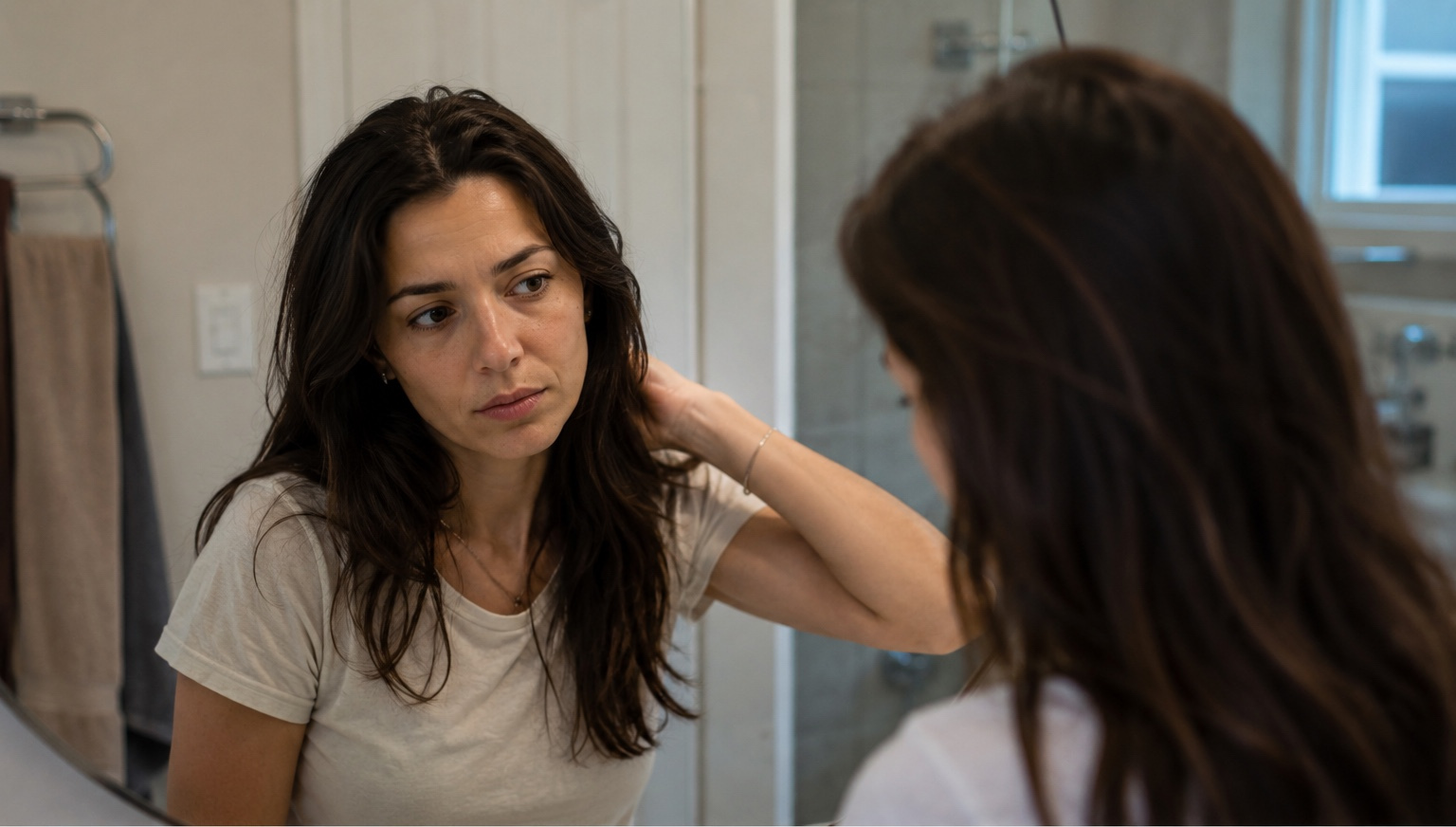

Lice got filed under "kids' problems" somewhere along the way, and it stuck. School nurses check children. Notices go home to parents. Treatment kits show pictures of small children. The adult doing the combing rarely thinks to check their own head.
That's a problem, because adults get lice too. Regularly. And because nobody expects it, adult cases tend to run longer before anyone catches them.
How Adults Get Lice
Same way anyone does: direct head-to-head contact. According to the CDC, that's far and away the main route. Lice crawl. They don't jump, they don't fly, they don't travel through the air.
For adults, the most common source is their own kids. Bedtime reading with heads together, carrying a small child on your shoulders, morning hair routines, hugs — a parent who spends 45 minutes working through a child's lice-infested hair has had real exposure. Most don't think to check themselves afterward.
It also happens through partners, siblings, and elderly family members you're in close contact with. Shared hats and hairbrushes are a lower-risk route, but not zero.
Why Adult Cases Go Undetected Longer
A few things work against adults catching this early.
Itching isn't reliable. The CDC notes that itching can take 4 to 6 weeks to develop during a first infestation — it's an allergic reaction to lice saliva that builds slowly. An adult who hasn't had lice before can carry an active case for a month without feeling anything unusual.
Nobody checks adults. The system that catches lice in kids — school nurses, post-notice head checks by parents — doesn't exist for grown-ups. If you're not looking, you won't find it.
And most adults don't look. A scratchy scalp gets blamed on dry skin, a new shampoo, stress, whatever. Lice isn't in the differential until the case is well established.
What Makes It Harder to Deal With as an Adult
Seeing your own scalp is genuinely difficult. The places lice concentrate — the nape of the neck and behind the ears — are exactly the spots you can't see clearly on yourself. A two-mirror setup under good lighting helps, but you're still working at awkward angles.
More hair means more work. A systematic comb-through on long adult hair takes significantly longer than the same process on a child's hair. It's not just inconvenient — it's easy to rush and miss things.
Embarrassment slows everything down. Most adults don't want to tell anyone they have lice. That delay gives the case more time to spread to a partner, a sibling, whoever else they're in regular close contact with.
Partners need to be screened. If one adult in a household has lice, their partner has almost certainly had sufficient head contact to warrant a check too. That conversation feels awkward, but skipping it is how the case comes back.
Myths Worth Clearing Up
"Adults with clean hair don't get lice." Wrong. Lice don't care about hygiene — clean, product-free hair is actually easier for them to move through. The hygiene myth is why a lot of adults dismiss lice as a possibility and miss it.
"You'd know if you had it." Not necessarily, especially in a first infestation. The itch takes weeks to develop, and some people never develop significant itching at all even with an established case.
"If only the kid has it, the adults are fine." This is probably the most costly misconception. An untreated adult in the household is how lice keeps cycling back to the same child after round after round of treatment. If your child has lice and you've been in regular close contact with them, you need to be checked — not assumed clear.
What to Do If You Find It
Confirm it first. Use a fine-tooth lice comb on damp hair under good lighting. Work through sections, wiping the comb on a white paper towel after each pass. Focus on the nape of the neck and behind the ears. Nits are small yellowish or tan ovals attached tightly to the hair shaft close to the scalp — they won't slide when you run a fingernail along the shaft, unlike dandruff.
If you find something, treat promptly and check your partner the same day. OTC permethrin and pyrethrin products are less reliable than they were a decade ago — a 2023 PMC meta-analysis found that 82% of lice sampled after 2015 were resistant to pyrethroid compounds. An oil-based physical removal approach doesn't have that problem since it works through suffocation rather than chemistry.
Why Getting Professional Help Actually Makes Sense Here
Treating your own head thoroughly is hard. The spots you can't see clearly are the spots lice prefer. A self-administered strand-by-strand nit check in a bathroom mirror is imprecise at best. Add in the fact that you may also be managing your child's treatment at the same time, and the odds of doing a rushed, incomplete job on yourself go up.
LiceDoctors treats adults in the same visit as children, covering the whole household at once. A technician handles the oil application, systematic combing, and nit check across every section of your scalp — including the sections you'd struggle to reach. Chemical-free, backed by a 30-day guarantee, available 7 days a week including evenings. The vehicle is unmarked, so there's nothing to explain to anyone outside.