
.svg)
.svg)

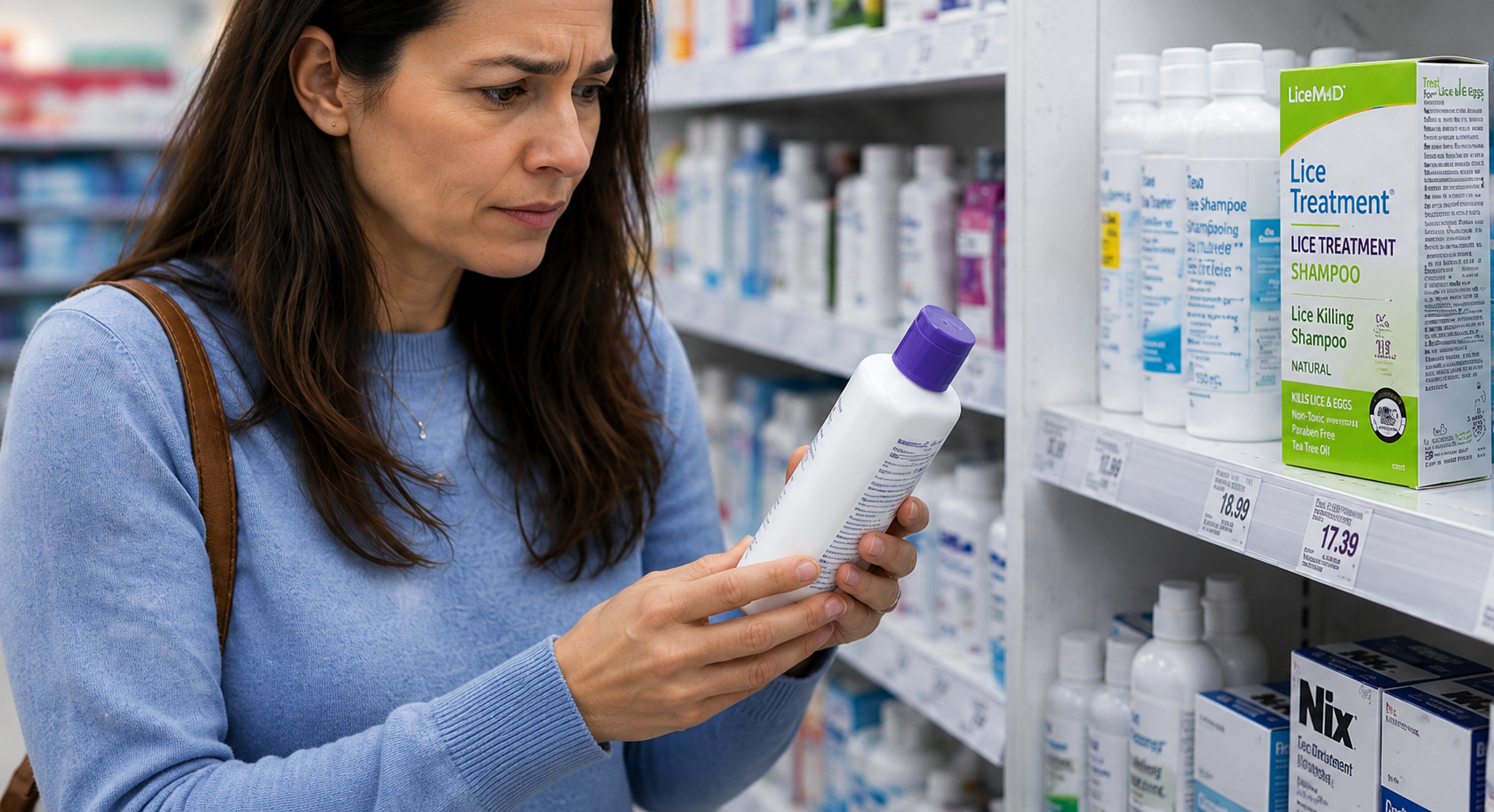

When a parent finds lice, the first move is usually a trip to the pharmacy. A lice shampoo goes in the basket, the instructions get followed, and a week later the scratching starts again. Another box. Same result.
This isn't bad luck. It's resistance — and it's been documented in the scientific literature for years, just not on the packaging.
What's In Most Lice Shampoos
The two most common active ingredients in over-the-counter lice treatments are permethrin and pyrethrin. Permethrin is synthetic. Pyrethrin comes from chrysanthemum flowers. Both kill lice by disrupting their nervous system.
When they were introduced in the 1980s, they worked well. Efficacy rates topped 90%. The CDC's clinical care page on head lice now acknowledges that lice have developed resistance to 1% permethrin — the concentration in most OTC products — while noting that the full scale of resistance in the US is hard to measure.
The research has been measuring it anyway.
The Resistance Problem
A meta-analysis published in PMC in 2023 pooled 20 studies and put the global prevalence of pyrethroid resistance in head lice at 59%. The US picture is worse. The same analysis found that resistance rates after 2015 hit 82%.
A separate systematic review from 2021 that covered 24 studies put the mean global resistance frequency at 76.9%. Four countries — Australia, England, Israel, and Turkey — showed 100% resistance in their sampled populations.
For historical context: Mayo Clinic Proceedings research found that one study detected only 28% insecticidal activity in OTC lice products. In the mid-1980s, pyrethrin products killed lice in 10 to 23 minutes. By 2000, 47% of lice survived three full hours of exposure to those same products.
So yes, the shampoo might genuinely not work. Not because you applied it wrong.
Why Families Don't Realize This
The packaging won't tell you. It says to retreat in 7 to 10 days if needed and call a doctor if things persist. There's no mention of resistance, no disclosure that the active ingredient may be ineffective on the specific lice in your child's hair.
So parents follow instructions. They retreat. They switch to a different brand — which usually contains the same active ingredient under a different name. Round three looks the same as rounds one and two.
What About Prescription Options?
There are prescription lice medications that work differently. Spinosad (Natroba), benzyl alcohol (Ulesfia), and malathion are among the FDA-approved options the CDC lists. Oral ivermectin is used in some cases too.
These do better against resistant lice. The trade-offs: a doctor's visit is required, some aren't approved for young children (benzyl alcohol isn't for kids under six months, malathion is flammable during application), and they're not always the fastest path through an infestation when you have three kids who all need to be cleared before Monday.
Physical Removal: The Approach That Doesn't Have a Resistance Problem
Lice can't adapt to being suffocated. That's the whole logic behind oil-based treatment.
Applying oil to the hair coats lice and blocks their breathing spiracles, immobilizing them. It also loosens the protein bond nits use to attach to the hair shaft, which makes combing them out significantly easier than it is on dry hair with a dry comb. The resistance status of the lice is irrelevant because the mechanism has nothing to do with their nervous system.
The catch is the combing. Nits that survive any treatment — chemical or oil — will hatch in 6 to 9 days and restart the whole cycle. The oil does the heavy lifting on live lice. The strand-by-strand nit check is what closes the case.
How LiceDoctors Handles It
LiceDoctors sends a trained technician to your home to do the full process: oil application, systematic combing, and a strand-by-strand nit check before leaving. The whole family gets treated in one visit. No pharmacy runs, no guessing whether the kit worked.
Available 7 days a week including evenings, with a 30-day guarantee — if live lice turn up after the follow-up protocol, the technician comes back at no charge.