


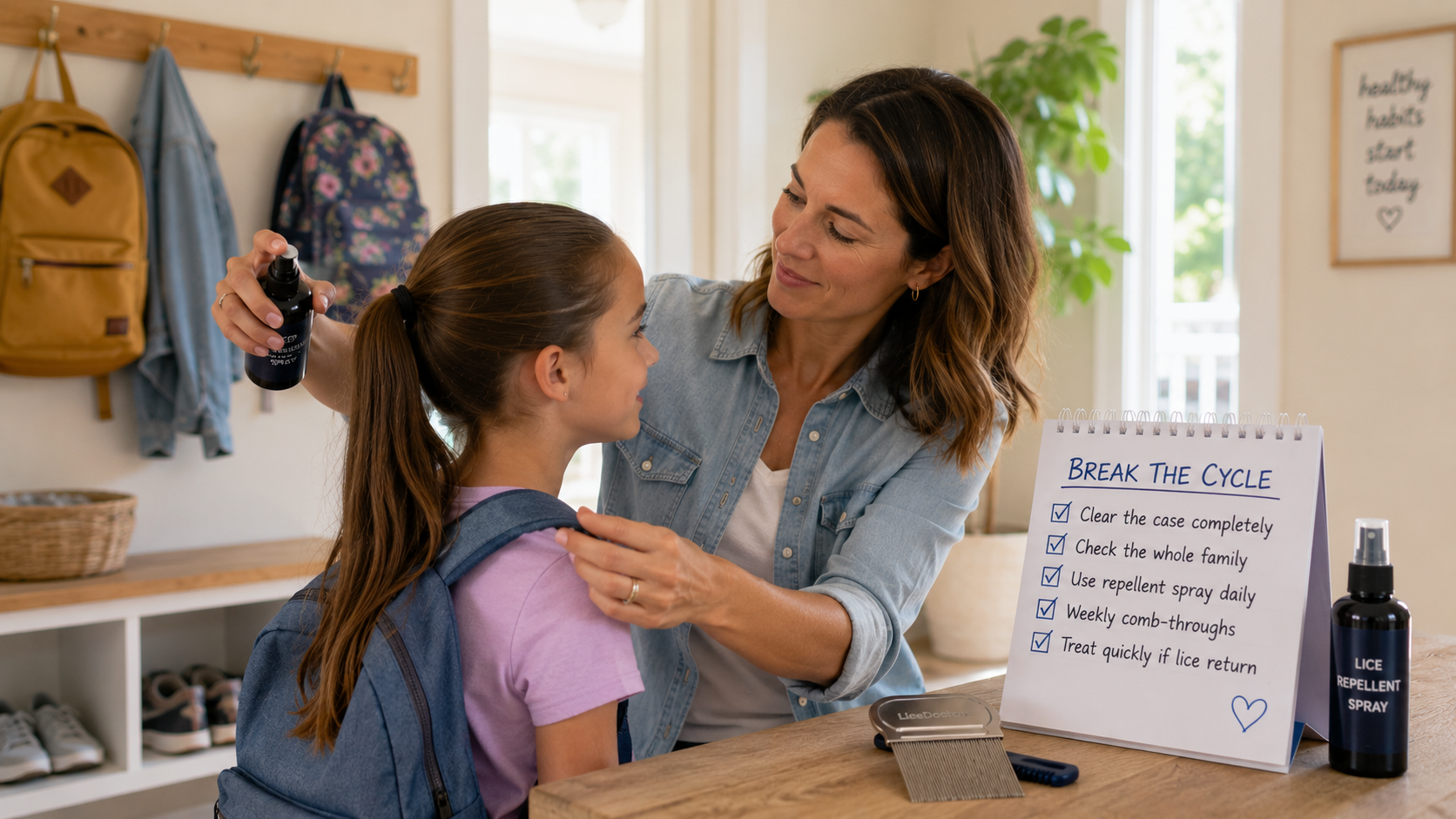

Getting lice once is stressful enough. Finding it again two months later — after everything you did — is a different kind of frustrating. It feels like something went wrong, like the treatment didn't really work, or like your child is somehow more susceptible than other kids.
Usually the explanation is simpler than that.
There Is No Immunity
Some parents assume that getting lice once means their child has some protection against it. That's not how it works. According to the CDC, there is no immunity to head lice. The body does develop an allergic response to lice saliva over time — which is what causes the itching — but that reaction doesn't prevent re-infestation. A child who's had lice three times is no more protected against a fourth case than a child who's never had it.
The Three Real Reasons It Keeps Coming Back
The first case wasn't fully cleared. This is the most common reason lice seems to return quickly. A missed nit hatches in 6 to 9 days. The nymph matures in another 9 to 12 days. Four weeks after a "successful" treatment, there can be a full case again. OTC treatments are especially prone to incomplete clearance because they often don't kill nits reliably and because many US lice strains are resistant to their active ingredients. If lice come back within 2 to 3 weeks of treatment, this is the likely explanation.
Re-exposure from the same source. If your child's classroom has multiple cases, or if a close friend regularly has lice that go untreated, re-exposure is a real ongoing risk. Treating your child doesn't protect them from a friend or classmate who has lice and hasn't been treated. If lice come back 3 or more weeks after a cleared case, re-exposure is more likely than treatment failure.
Someone in the household wasn't treated. A parent or sibling who has lice but wasn't checked or treated will reinfect everyone else. This happens more than most families expect — adults often have mild or no symptoms and don't realize they're carrying lice. If a household member was assumed clear without actually being checked, that's worth revisiting.
How to Actually Break the Cycle
Get a professional treatment that clears the case completely. The strand-by-strand nit check at the end of a LiceDoctors visit is what makes the difference between a case that's resolved and one that restarts in a few weeks. A 99.6% success rate across 600,000+ clients reflects a process that's designed to clear cases, not just treat them.
Check the whole household at once. Every person who has had close contact with the affected child should be screened in the same visit. The LiceDoctors hourly rate covers the whole family, so there's no reason to skip anyone.
Use the Lice Repellent Spray after treatment. Spraying the hair each morning during school season makes the hair less hospitable to lice. It's not a guarantee, but it raises the barrier in a way that costs very little time.
Do weekly checks during school year. Catching a case early — one or two nits close to the scalp — is a much smaller problem than catching it three weeks in. A quick comb-through once a week during the school year takes five minutes and stops small cases from becoming big ones.
Every treatment is backed by LiceDoctors' 30-day guarantee. If live lice are found after following the aftercare instructions, the technician comes back at no charge.


