.svg)
.svg)



When rainy weather keeps kids inside for recess, it often brings a mix of excitement and restlessness. Classrooms turn into play spaces, hallways fill with chatter, and groups of children gather for games, crafts, or story time. While indoor recess can be fun, it can also create the perfect conditions for head lice to spread in classrooms.
For parents, hearing that lice are present in the classroom can cause immediate concern. But the good news is that understanding why indoor recess increases lice transmission can help families and schools prevent infestations and respond quickly if they occur.
In this article, we’ll explore why head lice spread more easily during indoor recess at school, how lice transmission actually happens, and what parents and schools can do to keep kids comfortable, confident, and lice-free, even on the rainiest days.
Understanding Head Lice: The Basics
Before discussing indoor recess, it helps to understand how lice spread.
Head lice are tiny insects that live on the human scalp and feed on small amounts of blood. They cannot fly or jump. Instead, they move by crawling from one hair strand to another.
Because of this, lice spread primarily through direct head-to-head contact.
LiceDoctors treatment specialists explain that head-to-head contact is responsible for the vast majority of lice transmission in schools and among children.
Common situations where lice transmission occurs include:
- Kids leaning together while playing games
- Sharing tablets or books closely
- Sitting shoulder-to-shoulder during group activities
- Hugging or whispering to friends
- Taking selfies or watching videos together
Why Indoor Recess Changes the Environment
Outdoor recess naturally spreads children across large spaces like playgrounds and fields. Kids run, climb, swing, and move freely.
Indoor recess is very different.
Instead of spreading out, children gather in small shared spaces, often sitting close together for extended periods. This shift dramatically increases the likelihood of head-to-head contact.
Several factors make indoor recess an ideal situation for lice transmission.
1. Close Contact During Games and Activities

Indoor recess usually involves quieter group activities such as:
- Board games
- Card games
- Drawing or coloring
- Craft stations
- Building toys like blocks or LEGO
During these activities, children often sit side by side or face to face, leaning in closely while talking or collaborating. It’s a normal part of how kids play and interact indoors.
For lice, this proximity makes it easy to crawl from one child’s hair to another’s. Unlike outdoor play, where kids are constantly moving, indoor activities often keep heads close together for longer periods of time.
2. Shared Seating and Crowded Spaces
Rainy day recess often happens in classrooms, cafeterias, libraries, or gyms.
These environments can become crowded quickly.
Children may sit:
- On the floor in circles
- At shared tables
- In small reading corners
- On bean bags or couches
When many students are gathered in one area, accidental head contact becomes much more likely.
Even brief contact, such as leaning over to look at a friend’s drawing, can allow lice to transfer.
3. Quiet Time Encourages Closer Interaction
During indoor recess, teachers often encourage calm activities to maintain classroom order.
This means children may:
- Whisper together
- Huddle over books or tablets
- Sit shoulder-to-shoulder watching videos
These quieter moments often involve heads touching or nearly touching, which creates ideal conditions for lice transmission.
Kids rarely realize their heads are touching while they’re focused on a game or story.
4. Rainy Weather Means More Indoor Days
In some regions, rainy seasons can bring multiple indoor recess days in a row.
When children repeatedly spend recess inside, the number of close-contact interactions increases.
If one student unknowingly has lice, repeated indoor recess periods can allow the insects to spread gradually to multiple classmates before anyone notices.
5. Jackets, Hats, and Hoodies Add Extra Contact
Rainy days often mean extra clothing layers.
Kids arrive at school wearing:
- Hooded sweatshirts
- Rain jackets
- Hats
- Scarves
During indoor recess, these items may pile up on shared hooks, cubbies, or chairs.
While lice are less likely to spread through objects than through direct contact, crowded clothing areas can occasionally contribute to transfer.
However, it’s important to remember that head-to-head contact remains the primary way lice spread.
Why Lice Spread So Easily Among Children
Children are naturally social and affectionate. They hug, lean together, and gather in groups.
These behaviors are healthy and important for development, but they also make schools one of the most common places where head lice can circulate among children.
Indoor recess simply concentrates these interactions in a smaller space.
The result is a higher chance that lice can move from one child to another.

Signs of Head Lice Parents Should Watch For
When lice begin spreading in a classroom, symptoms may appear gradually. Some children may notice itching right away, while others may not feel any irritation for several weeks. Because of this, parents should keep an eye out for several common signs of head lice.
Frequent Head Scratching
One of the most common symptoms of lice is persistent itching. Children may scratch their heads often, especially around the scalp, behind the ears, and along the back of the neck. This itching occurs because the scalp reacts to lice bites.
Difficulty Sleeping
Head lice tend to be more active at night. Some children may feel increased itching or irritation during bedtime, which can make it harder for them to fall asleep comfortably.
Small Red Bumps on the Scalp
Repeated scratching may cause mild irritation or small red bumps on the scalp. In some cases, these areas can become slightly inflamed due to frequent scratching.
Visible Nits (Eggs)
Nits are tiny lice eggs that attach firmly to individual hair strands close to the scalp. They are often yellowish or white and are about the size of a grain of sand. Unlike dandruff, nits do not easily slide off the hair shaft and usually need to be removed with a lice comb.
Live Lice
Adult lice are small tan or gray insects about the size of a sesame seed. They move quickly through the hair, which can make them difficult to spot during a quick check.
Why Early Detection Matters
The sooner lice are identified, the easier they are to treat.
If lice go unnoticed for several weeks, they can spread more widely within classrooms, families, and social groups.
Early detection helps:
- Reduce the number of lice present
- Prevent further transmission
- Make treatment faster and simpler
Parents who check their child’s hair regularly, especially after hearing about lice at school, can catch infestations early.
What Schools Can Do During Indoor Recess
Schools play an important role in minimizing lice transmission while maintaining a supportive environment for students.
Many schools already follow best practices that help reduce the risk of spread.
These include:
Encouraging Personal Space During Activities
Teachers may space children slightly apart during indoor games or crafts.
Avoiding Shared Hair Items
Schools typically discourage sharing items such as:
- Hairbrushes
- Hats
- Hair accessories
Maintaining Clear Communication With Parents
If lice are identified in a classroom, schools often notify parents so they can check their children at home.
Open communication helps families respond quickly and prevents unnecessary panic.
What Parents Can Do After Indoor Recess Seasons
Parents don’t need to worry every time it rains, but staying aware can help prevent lice from becoming a bigger issue.
Here are simple steps families can take.
Perform Regular Head Checks
Once a week, examine your child’s scalp under good lighting.
Look closely near:
- The hairline
- Behind the ears
- The nape of the neck
Using a fine-toothed lice comb can make this process easier.
Encourage Kids to Avoid Head-to-Head Contact
Children can still socialize and play without pressing heads together.
Simple reminders can help build awareness.
Tie Back Long Hair
Ponytails, braids, and buns may reduce the likelihood of hair strands touching.
Respond Quickly If Lice Are Found
Prompt treatment helps prevent lice from spreading to siblings or classmates.
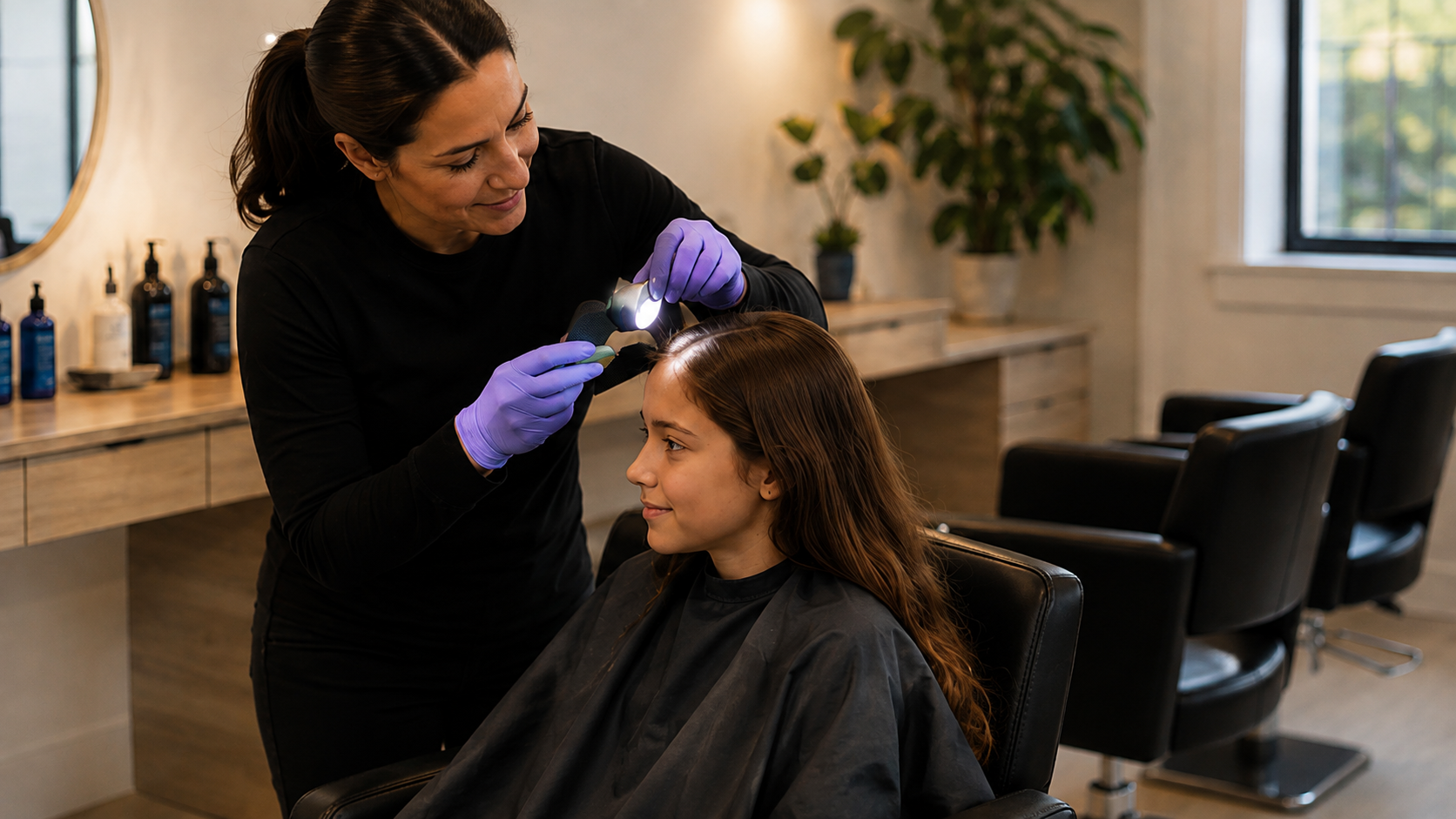
Professional lice removal services can safely eliminate lice and nits without harsh chemicals.
Why Professional Lice Treatment Can Help
Treating head lice at home can sometimes feel overwhelming for parents. Even after trying over-the-counter products, many families find themselves spending hours combing through hair and worrying about whether every nit has been removed.
Professional lice treatment services provide trained technicians who know how to carefully inspect the scalp and remove both lice and eggs. Their experience allows them to identify even small nits that are easy to miss during home treatment.
Professional services often include:
- A detailed scalp and hair inspection
- Careful manual removal of lice and nits
- Guidance on preventing reinfestation
- Follow-up support if needed
For many families, professional treatment offers peace of mind and helps resolve lice infestations more quickly and effectively.
Why Indoor Recess Isn’t the “Cause” of Lice
It’s important to remember that indoor recess doesn’t create lice—it simply increases opportunities for them to spread.
Lice can circulate at any time during the school year through normal interactions such as:
- Sleepovers
- Sports practice
- Group activities
- Classroom learning
Indoor recess is just one of many situations where children may come into close contact.
Supporting Kids Without Embarrassment
If a child gets lice, it’s important to approach the situation with understanding.
Children may feel embarrassed or worried about what classmates will think.
Parents and educators can help by reinforcing that:
- Lice are common among kids
- Anyone can get them
- Treatment is straightforward
- There is nothing to be ashamed of
A calm, supportive response helps children feel safe and confident.
When to Seek Professional Help

While some families successfully manage lice at home, there are situations where professional treatment may be the best option.
Parents may want to consider professional lice removal services if:
- Home treatments are not working
- Nits are difficult to remove completely
- Multiple family members are affected
- Lice keep returning after treatment
- They want fast, reliable results
Experienced lice technicians can quickly identify active lice and remove them safely, helping families return to their normal routines with less stress.
Frequently Asked Questions About Head Lice
How do you stop lice from spreading in the house?
If one family member has head lice, it's important to act quickly to prevent it from spreading to others. Experts recommend checking everyone in the household for lice and treating anyone who has them. Personal items such as hairbrushes, pillowcases, hats, and bedding should be washed in hot water and dried on high heat. Avoid sharing hair accessories, headphones, and hats until the infestation is resolved.
Can rainwater cause lice in hair?
No, rainwater does not cause head lice. Lice cannot appear because of weather, rain, or poor hygiene. Head lice spread only through direct head-to-head contact with someone who already has lice. Rainy days may increase lice transmission in schools simply because children spend more time indoors, sitting close together.
What time of year are lice most active?
Head lice can occur any time of the year, but outbreaks are most common during the school year, especially in the fall and winter months. This is when children spend more time in classrooms and in indoor activities where close contact occurs.
What smell do lice hate the most?
Some natural oils, such as tea tree oil, peppermint oil, eucalyptus, and lavender, are often believed to repel lice. However, research shows that these scents may help deter lice but do not reliably prevent or eliminate infestations. The most effective approach is proper lice removal and treatment.
The Bottom Line
Rainy days may keep kids indoors, but they don’t have to lead to panic about lice. Indoor recess simply creates a setting where children spend more time sitting closely together, increasing the chances of head-to-head contact, the primary way lice spread.
By understanding how lice transmission works and checking children’s hair regularly, parents can catch infestations early and address them effectively. With the right knowledge and support, lice are manageable, and children can stay focused on learning, laughter, and play, even on the rainiest school days.
If you ever suspect your child may have lice, professional services like LiceDoctors offer in-home head lice treatment, with trained technicians who carefully remove lice and nits in the comfort of your home. Early detection, proper treatment, and a calm approach are the best ways to keep lice from turning rainy day blues into a bigger problem.