.svg)
.svg)



People tend to think of lice as something that happens to little kids in elementary school, not college students living on their own for the first time. That assumption isn't quite right, and it's one of the reasons lice can spread through a dorm before anyone realizes what's going on.
Lice don't care how old you are. They care about proximity. And dorm life is basically a proximity machine: shared rooms, shared bathrooms, packed gyms, late-night study sessions where everyone's heads are close together over the same laptop. The conditions that make lice spread easily in elementary schools exist on college campuses too, just with less awareness because nobody's expecting it.
How Lice Actually Spread in a Dorm
According to the CDC, the main way lice spread is direct head-to-head contact. That happens more in dorms than people realize: crowding around someone's phone, sharing a bed during a sleepover with a friend, hugging hello after a semester apart. Lice crawl, they don't jump or fly, so they need that close contact to move from one person to the next.
Beyond direct contact, dorm life adds a few extra risk factors that don't usually apply to a family home. Shared bathrooms and communal laundry rooms mean towels, hats, and hair accessories can end up mixed together, even briefly. Roommates sharing a small space for an entire semester means any lapse in keeping personal items separate creates an opening. And because most students don't expect to get lice at this age, it can take longer to notice and get treated, which gives it more time to spread to roommates, classmates, or a significant other.
A real example: in 2026, students at Huntington University in Indiana saw an outbreak spread through at least four dormitories on campus, traced back to a group of students returning from a trip abroad. It's not an isolated case. College health centers at schools like Marquette University maintain dedicated guidance pages for head lice specifically because dorm-style living creates the right conditions for it to happen.
Why It's Easy to Miss at First
Itching is usually the first sign people look for, but the CDC notes it can take four to six weeks for itching to even start during a first infestation. That's an entire semester's worth of time where someone could have lice and not know it, especially with a packed school schedule and the general chaos of dorm life making it easy to write off an itchy scalp as something else.
By the time someone notices, it's common for a roommate or a few people in a friend group to already be affected. This isn't about anyone being unclean. Lice infestation has nothing to do with hygiene. It's purely about contact, and college dorms create plenty of opportunities for that.
What to Do If You Find Lice in Your Dorm
The first step is confirming it's actually lice and not dandruff or product buildup. A fine-tooth comb under good lighting, checking close to the scalp and behind the ears, is the most reliable way to spot live lice or nits.
If it's confirmed, a few things matter:
Tell your roommate and anyone you've had close contact with. It's awkward, but it's the fastest way to stop it from spreading further through your friend group or floor.
Skip the DIY drugstore route if you can. Many over-the-counter treatments rely on pesticides that a growing number of lice populations have become resistant to. If a treatment doesn't fully clear the case, it often just looks like it came back.
Avoid sharing personal items for a couple of weeks. Hats, hairbrushes, and headphones included.
Wash bedding and recently worn clothing in hot water. Lice die quickly without a host, but it's still worth covering this basic step.
Why a Professional Treatment Makes Sense for Students
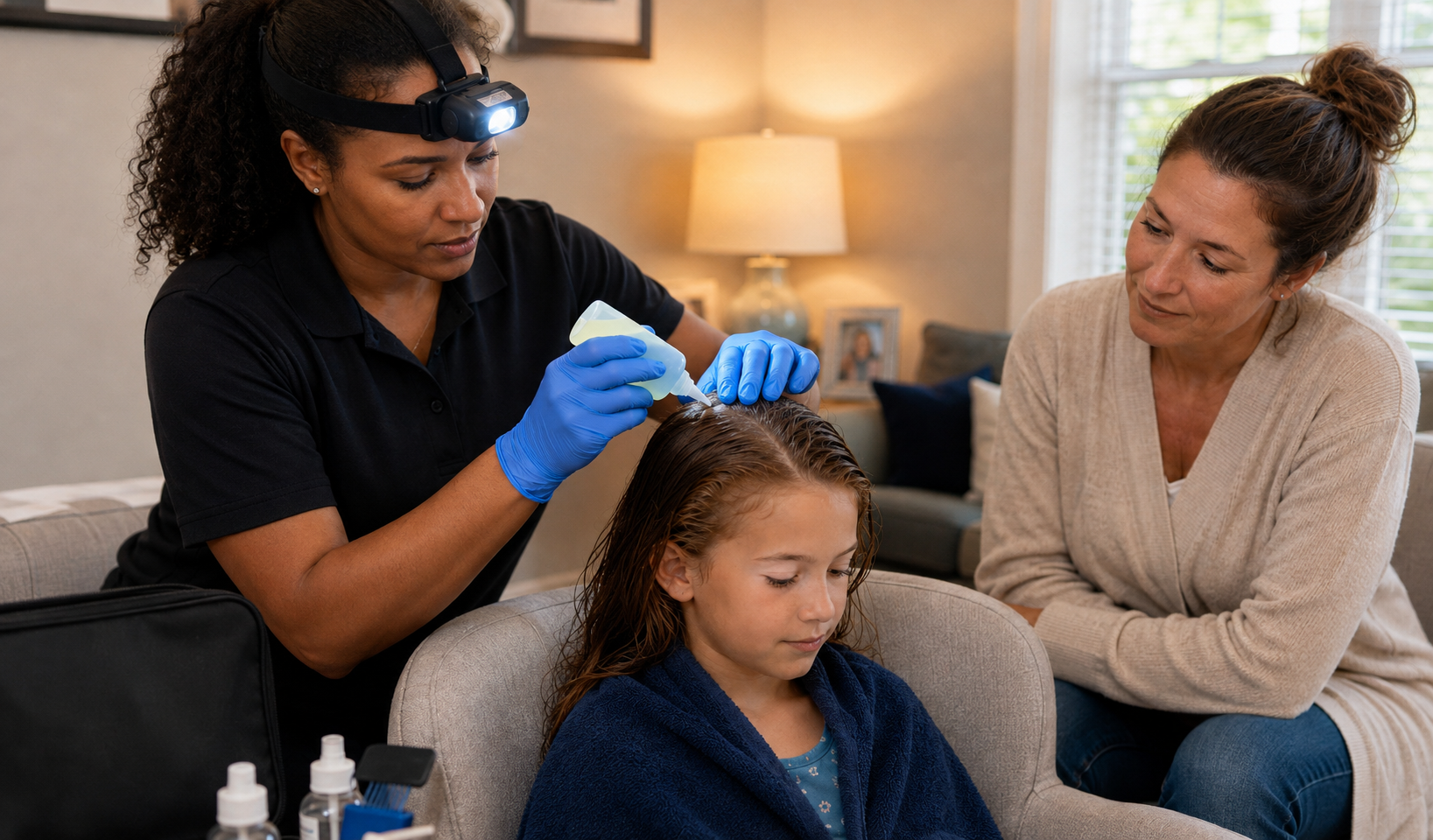
Dorm life doesn't leave much room for a multi-day DIY lice removal project. Most students don't have a private bathroom, a quiet space to do a thorough comb-through, or the time to manage repeat treatments around a class schedule. A professional in-home visit clears the case in a single appointment, with a technician trained specifically in nit removal, which is the part most DIY treatments get wrong.
LiceDoctors sends technicians directly to wherever a student is staying, including off-campus housing, 7 days a week. The treatment is chemical-free, safe, and discreet, arriving in an unmarked car so there's no need to explain to a roommate or RA what's going on. It comes with a 30-day guarantee, so if anything's missed, it gets handled at no extra cost.
For a college student trying to keep up with classes, a job, and a social life, one focused visit beats weeks of guessing whether a drugstore kit actually worked.