.svg)
.svg)

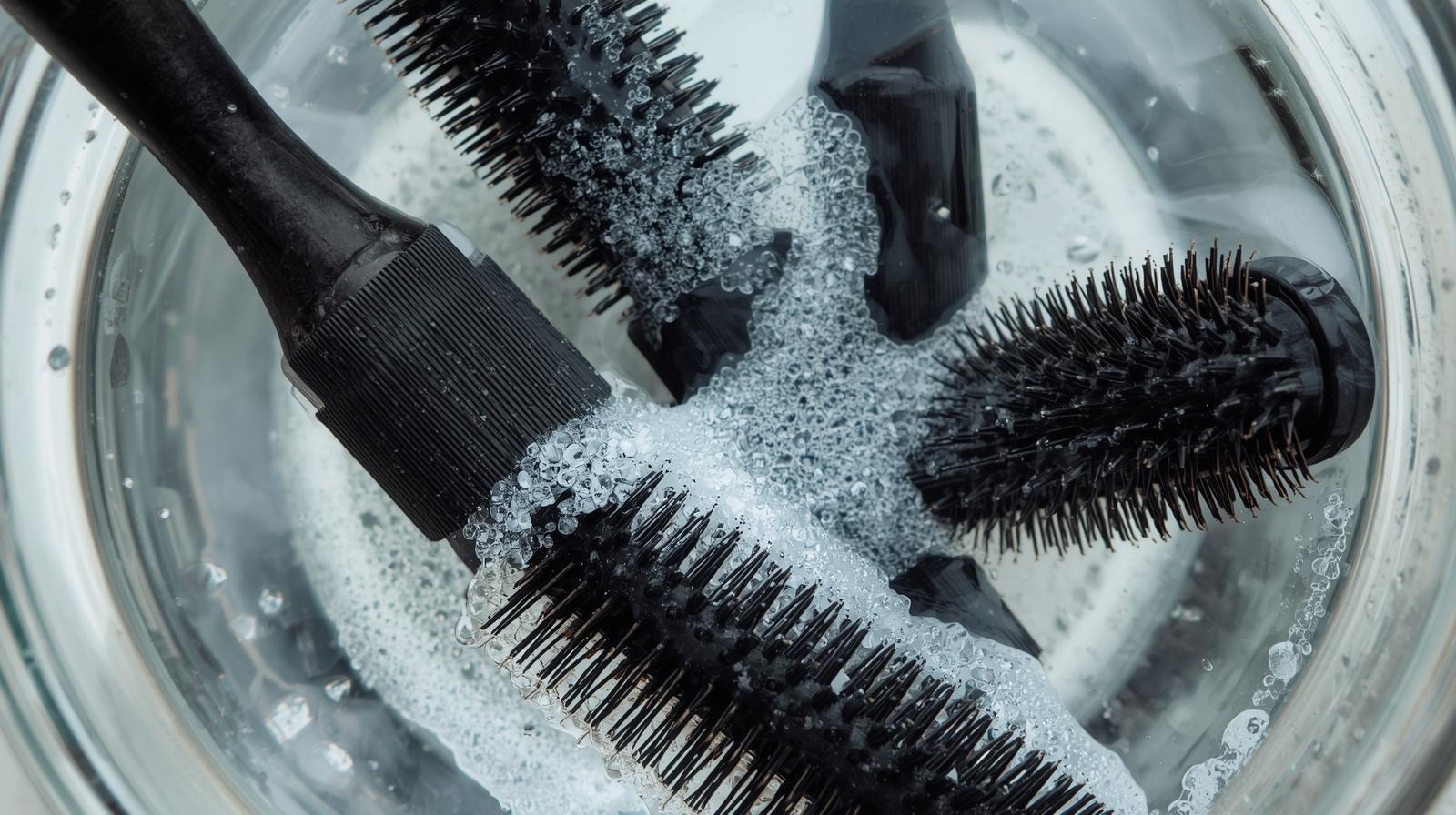

Spring is the perfect time for fresh starts. While many people think of spring cleaning as scrubbing floors or decluttering closets, one often-overlooked area deserves attention: your hair care tools. Your hairbrushes, combs, and styling accessories might look clean at first glance, but they can harbor dirt, oils, dead skin cells, hair product residue, and even bacteria or lice. Taking the time to properly sanitize your brushes not only promotes healthier hair and scalp but also reduces the risk of infections and infestations.
Why Cleaning Hair Brushes Matters
Your hairbrush is more than a styling tool, it’s a tiny collection of everything that touches your hair. Here’s what can accumulate on brushes over time:
- Oils from your scalp: Natural oils are great for your hair, but they can build up on brush bristles and trap dirt.
- Dead skin cells: Your scalp naturally sheds skin, which can settle on bristles.
- Hair products: Gel, mousse, hairspray, and oils can leave residue that hardens on brushes.
- Dirt and dust: Particles from your environment can settle on your brush.
- Bacteria, fungi, or even lice: Brushes can carry germs and parasites if not cleaned regularly.
Ignoring brush hygiene can lead to itchy scalps, dull hair, breakage, and in worst-case scenarios, infections or lice outbreaks. Regularly cleaning your brushes is a simple step that protects your hair and scalp health.
How Often Should You Clean Your Hair Brushes?
The frequency of cleaning depends on your hair type, styling habits, and whether the brushes are shared:
- Weekly cleaning: For people who use a lot of hair products or have oily hair, a weekly clean prevents buildup.
- Monthly deep cleaning: Even if you clean weekly, a deeper monthly scrub removes accumulated oils, dead skin, and product residue.
- After lice exposure: If anyone in your household has had lice, all brushes, combs, hair ties, and hats should be sanitized immediately to prevent re-infestation.
Think of hairbrush maintenance like washing your bed linens, it’s preventive care that keeps things healthy and fresh.
Step-by-Step Guide to Sanitizing Hair Brushes
Cleaning a hairbrush properly involves two steps: removing hair and debris, then sanitizing it. Here’s how to do it efficiently:
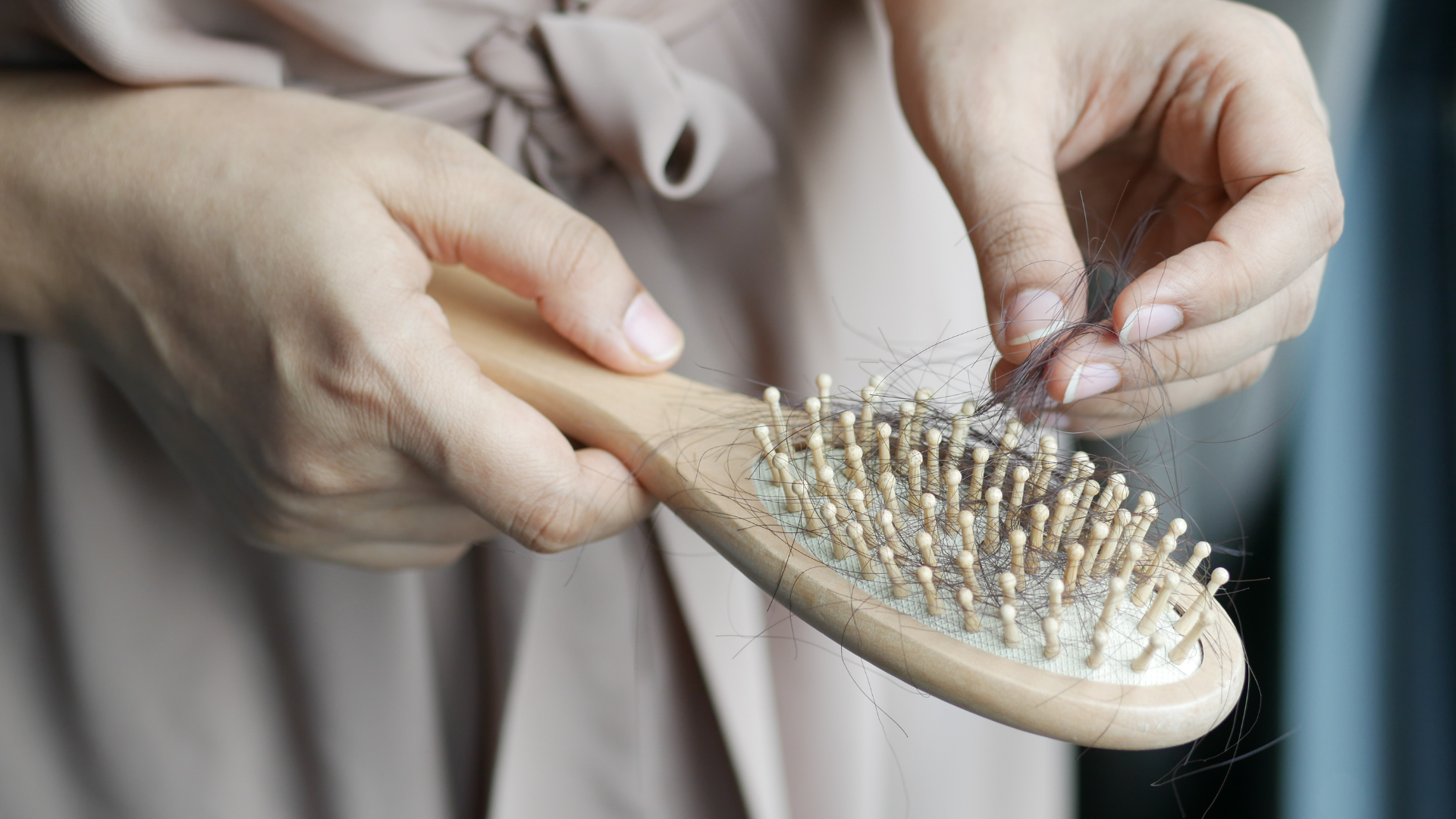
Step 1: Remove Hair and Debris
Start by physically removing any hair caught in the bristles:
- Use a comb, a toothbrush, or your fingers to lift hair from the brush.
- For stubborn tangles, scissors can help carefully cut knots without damaging the brush.
- Dispose of hair in the trash; don’t rinse it down the sink to avoid clogs.
Step 2: Wash the Brush
Once hair is removed, it’s time to wash:
- Prepare warm, soapy water: Fill a bowl or sink with warm water and add a few drops of mild shampoo or liquid dish soap.
- Soak the brush: Depending on the material, soak for a few minutes. Plastic and metal brushes are generally safe to soak; wooden brushes should only be dipped briefly to avoid water damage.
- Scrub gently: Use an old toothbrush to scrub around the bristles and base to remove oils, dirt, and residue.
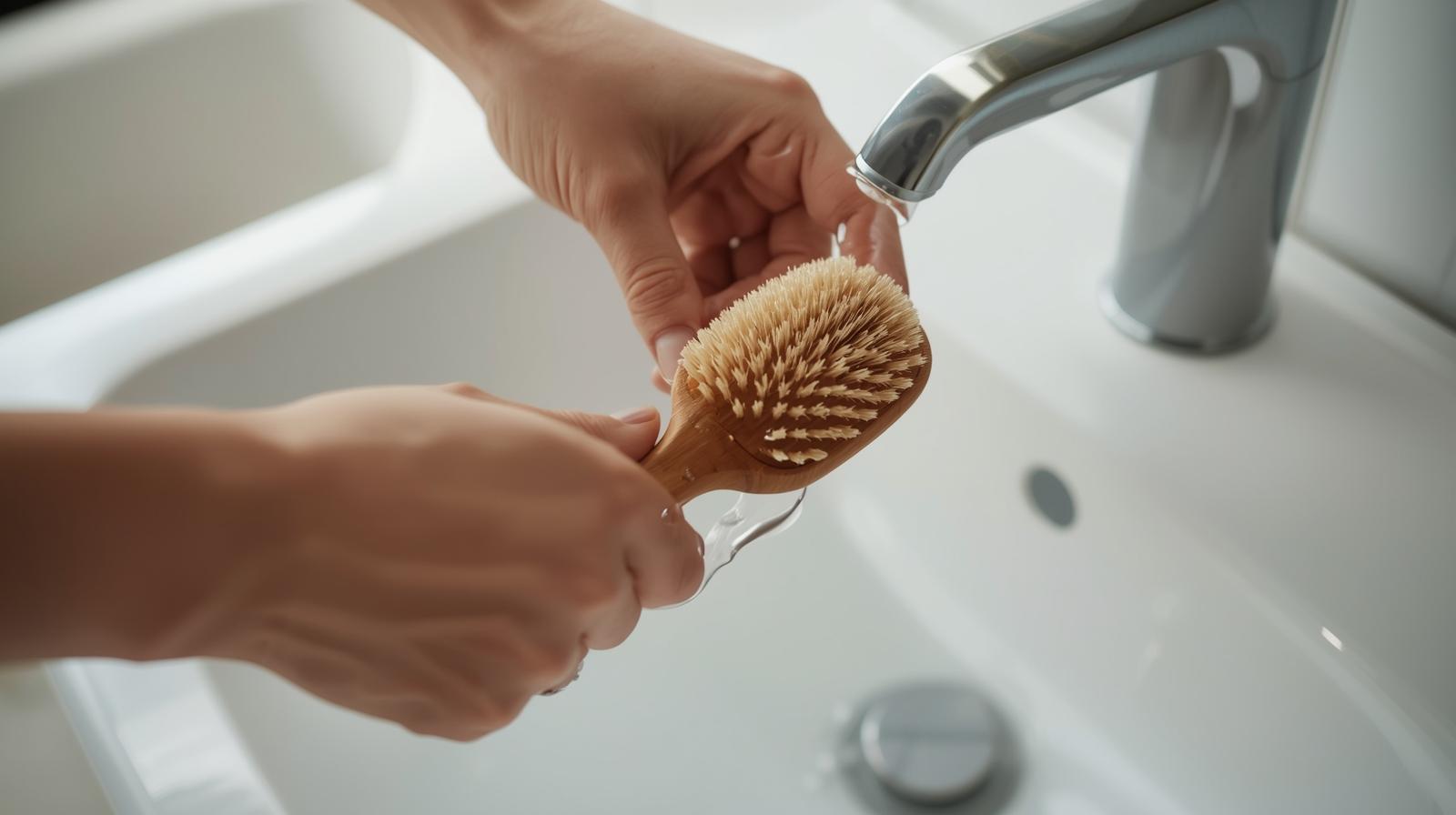
Step 3: Rinse and Dry
- Rinse thoroughly under running water to remove all soap.
- Shake off excess water and lay the brush bristle-side down on a towel to air dry. Avoid direct sunlight or heat sources, as they can warp bristles or handles.
Step 4: Disinfect for Extra Safety
For brushes used frequently or by multiple people, disinfecting is a good idea:
- Mix one part vinegar to two parts water or use rubbing alcohol.
- Soak or spray the brush bristles and let them air dry.
- Avoid soaking wooden handles in alcohol, as it can dry and crack the wood.
Disinfecting kills bacteria, fungi, and viruses and is especially important if someone in your household has lice.
Special Considerations for Different Hairbrush Types
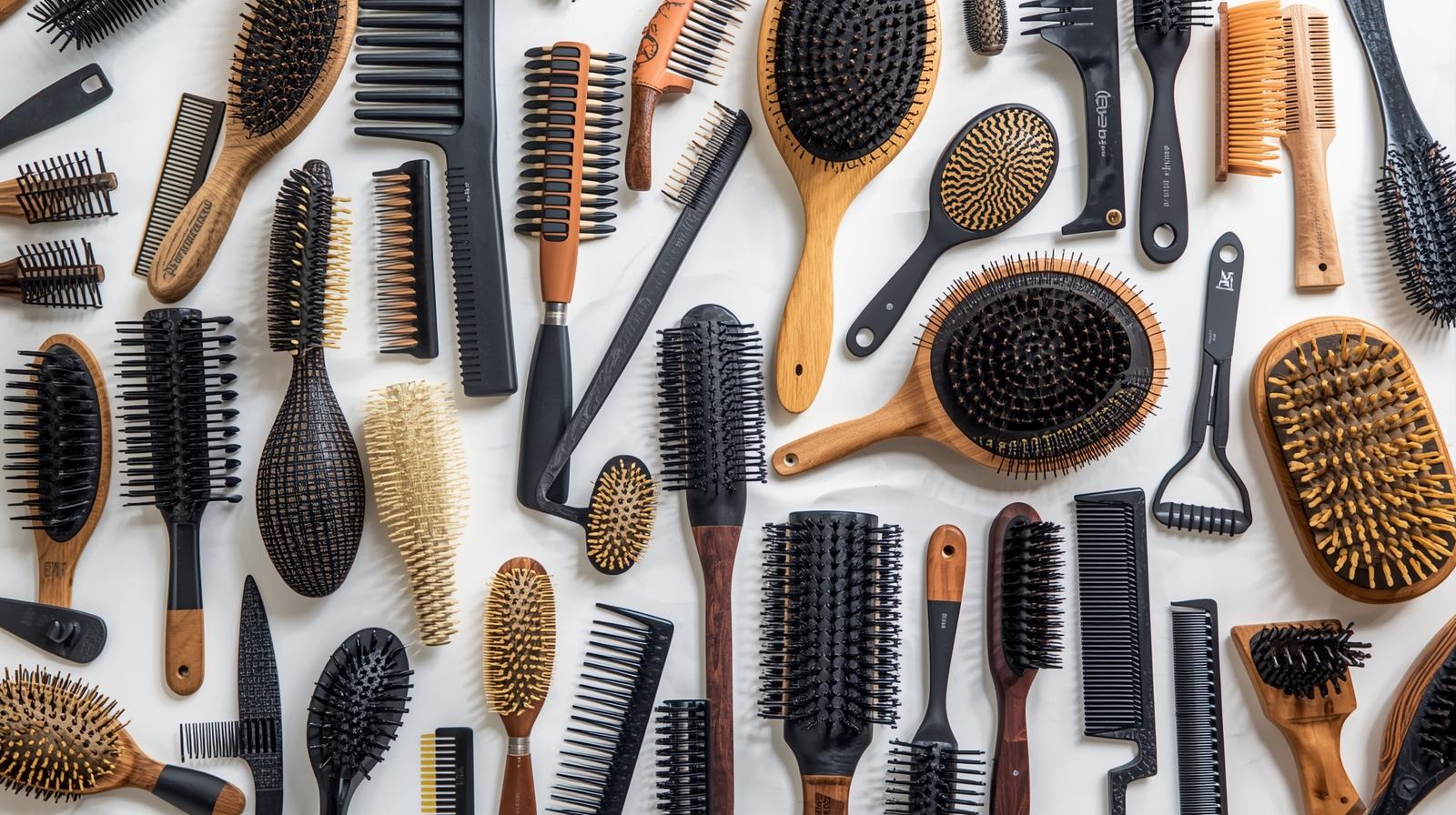
Not all brushes are made the same. Here’s how to handle them safely:
Plastic Brushes
- Can usually be soaked fully in warm water.
- Durable and easy to scrub with soap and a toothbrush.
Wooden Brushes
- Should not be soaked for long periods.
- Wipe bristles with soapy water or a vinegar solution, then dry immediately.
- Avoid harsh chemicals that can strip the wood’s finish.
Boar Bristle Brushes
- Gentle on hair but sensitive to water.
- Use a damp cloth or a soft brush to remove debris.
- Lightly wipe with a mixture of water and mild soap; rinse quickly and dry.
Metal Bristles
- Often found in vented brushes.
- Can be soaked in warm soapy water, then scrubbed carefully to avoid rust.
- Rinse thoroughly and dry completely to prevent corrosion.
Maintaining Clean Hairbrushes Between Washes
Keeping brushes clean doesn’t always require a full soak. These small habits help:
- Daily hair removal: Take a minute each day to pull hair from your brush.
- Spot cleaning: Wipe bristles with a damp cloth or alcohol pad after styling products are used.
- Avoid sharing brushes: Sharing brushes spreads oils, dirt, and even lice.
Even just 5 minutes a week can make a huge difference.
Spring Cleaning Your Entire Hair Care Routine
Sanitizing brushes is one part of a bigger picture. Consider these additional steps during your early spring hair care refresh:
- Replace old or worn brushes: Bristles that are bent or broken can damage hair.
- Clean hair ties and clips: Wash fabric hair ties in warm water and sanitize clips with alcohol.
- Deep clean combs: Soak plastic or metal combs in warm soapy water, then disinfect.
- Wash pillowcases and hats: These can harbor oils, sweat, and bacteria.
A complete hair care spring cleaning keeps your scalp healthy, hair shiny, and reduces the risk of lice or infections.
The Connection Between Clean Brushes and Lice Prevention
For families, lice prevention is a critical concern. Lice can spread through shared hair tools, hats, and bedding. Proper brush cleaning is a key step in prevention:
- Remove hair first: Lice and nits often cling to hair strands.
- Use hot water when possible: Most lice cannot survive temperatures above 130°F.
- Disinfect with alcohol or specialized lice solutions: Especially after exposure.
Regular brush maintenance is both preventive and reassuring, reducing the stress of unexpected infestations.
Professional Insight from LiceDoctors
At LiceDoctors, we emphasize prevention as much as treatment. Hairbrush sanitation is an easy, cost-effective step that complements regular lice checks and healthy hair habits. Our specialists often see families who overlook this step, and simple cleaning makes a noticeable difference in scalp health and peace of mind.
Tip from the pros: Store brushes in a dry, ventilated area to prevent mold and bacteria growth. Avoid leaving them in damp bathrooms where moisture can accumulate.
Eco-Friendly and Safe Cleaning Tips
You don’t need harsh chemicals to get a clean, sanitary brush:
- Vinegar: Naturally antibacterial and gentle on most bristles.
- Baking soda: Great for removing product buildup when mixed with water.
- Mild soap: Simple, safe, and effective for routine cleaning.
These solutions are kid-friendly, cost-effective, and safer for sensitive skin than many commercial cleaners.
Troubleshooting Common Issues
Even with proper care, brushes can face challenges:
- Residue build-up persists: Use a toothbrush or toothpick to reach tight areas.
- Odor: Vinegar rinse or soaking in mild soap removes smells.
- Loose bristles: If bristles fall out easily, it may be time to replace the brush.
Being proactive keeps brushes functional and hygienic.
Creating a Hairbrush Cleaning Routine
Consistency is key. Here’s a simple spring cleaning routine for hair tools:
- Daily: Remove hair from brushes.
- Weekly: Wash brushes with soap and water.
- Monthly: Deep clean and disinfect, inspect for wear, and replace if necessary.
- After lice exposure: Thoroughly sanitize all brushes, combs, and hair accessories.
Making this part of your routine ensures clean, healthy hair year-round.
Key Takeaways
Sanitizing your hairbrushes isn’t just about hygiene, it’s about protecting your hair, scalp, and overall health. Early spring cleaning is the perfect opportunity to refresh your hair care tools:
- Remove hair and debris first.
- Wash with warm, soapy water and scrub gently.
- Disinfect with vinegar or alcohol for extra protection.
- Pay attention to brush type to avoid damage.
- Maintain cleanliness with daily and weekly habits.
A clean hairbrush is a small step that makes a big difference in your hair’s appearance and health, while helping prevent lice and infections.
Final Thoughts
Spring cleaning isn’t just for your home, it’s for your hair too. Taking a little time to sanitize your brushes and tools is an investment in healthier hair, a cleaner scalp, and peace of mind. With the tips and steps above, you can make brush care simple, safe, and effective.
Remember: healthy hair starts with clean tools. Your hair deserves a fresh start this spring!
If you ever notice lice or suspect an infestation, don’t wait, book a professional appointment with LiceDoctors to get safe, effective treatment.

.jpg)