.svg)
.svg)


Schools in the Cupertino and Campbell area do not hold to a strict no-nit policy, and are instead vigilant regarding live bugs; children with active infestations will not be permitted in school.
Cupertino
Head Lice
Please report any case of head lice to the school office. Lice are attracted to all children. You will seldom see the lice themselves. The symptom is an itchy head. Look for the tiny silvery eggs (nits) attached to a strand of hair. After treatment, district policy requires that children not be allowed to return to school until all lice have been removed. Students must be checked in the office before returning to class. CEC Section 4942 & CAC, Title 5-Section 202.
Source Cupertino USD John Muir Elementary Handbook
Campbell
Head Lice Educational Handout
HEAD LICE (or pediculosis) are little insects that live on the human scalp and feed on blood. They are a small, tan‐colored insect (less than 1/8 of an inch long). They may live for days or weeks depending on temperature and humidity. They deposit tiny, gray/white eggs, known as “nits,” on the shaft of hair close to the scalp. The eggs need the warmth from the scalp for hatching. They cannot live for more than 48 hours away from the scalp as adult insects, and eggs cannot hatch at temperatures lower than those found close to the scalp. Head lice do not carry disease, and they are not a sign of uncleanliness. Lice are transmitted by direct contact, head to head. They crawl, they do not fly or hop.
10 Steps to Stay Ahead OF HEAD LICE:
- Watch for signs/symptoms of head lice: excessive itching or scratching of the head especially behind ears and nape of the neck.
- Check family members for live lice and nits (eggs) at least once a week. It helps to use natural light and a magnifying glass. Nits (eggs) attach with a cement‐like substance to the shaft of individual hairs.
- Treat family members who have lice. Over the counter medications (pediculicides) that kill lice and nits are recommended. Most of these chemicals require 2 treatments, 7‐10 days apart. If crawling lice are still seen after a full course of treatment, contact your healthcare provider.
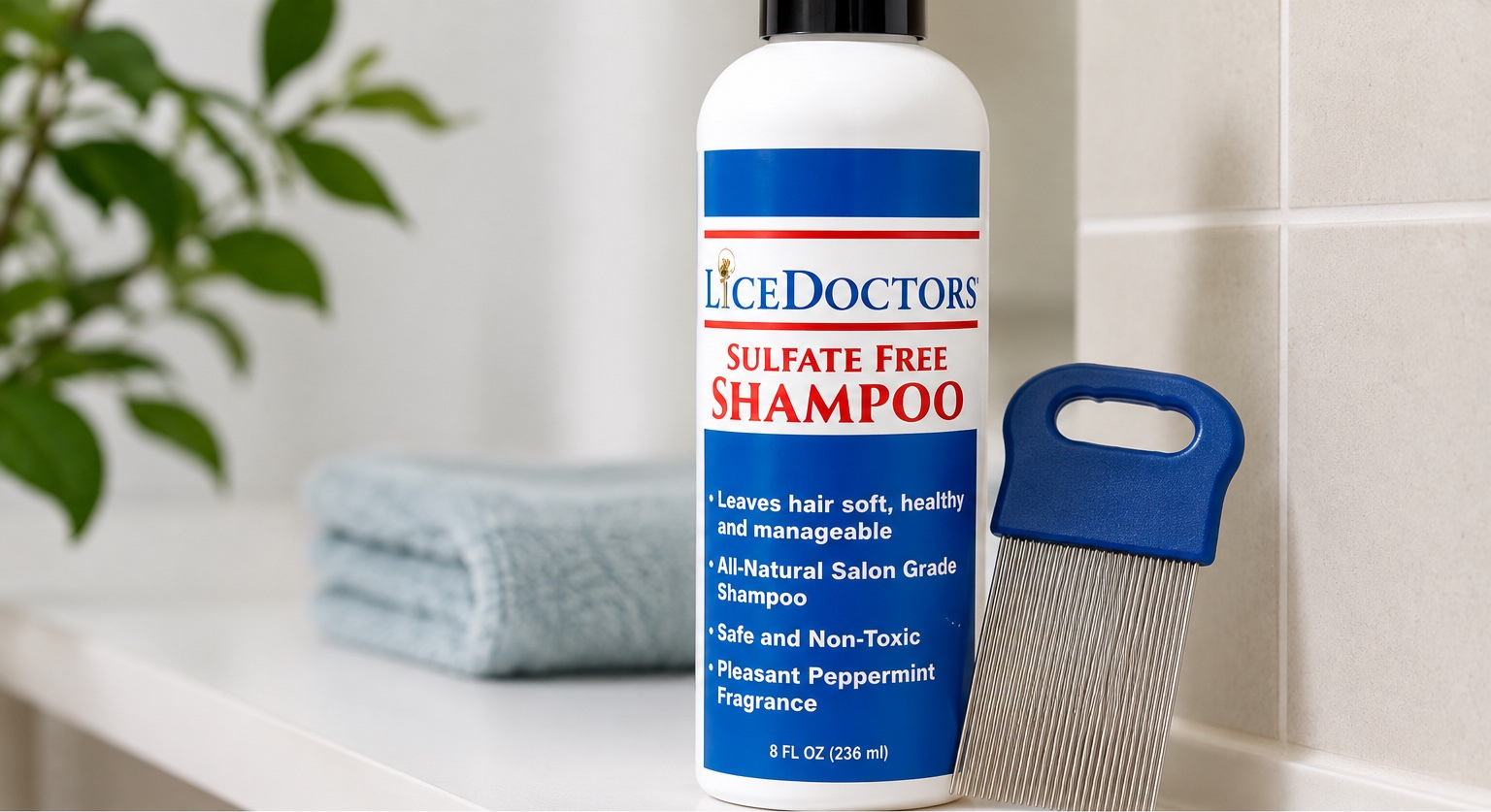
- Use head lice specialized shampoos, following manufacturer’s instructions, to be most effective. Use product over the sink. Keep eyes covered with a washcloth.
- Removing all nits (eggs) with a special fine‐toothed comb is the most effective way to get rid of them. This may be a tedious job.
- Wash and dry items that can be laundered on a hot setting. (hats, pillows, bedding, clothing, etc.)
- Toys, personal articles, bedding, and other fabrics that cannot be laundered with hot water and a dryer or dry‐cleaned can be kept away from people (in a plastic bag) for more than 2 days if there is a concern of infestation.
- Head lice can live for 1 ‐2 days away from the scalp; chemical treatment of the environment is not necessary. To remove head lice vacuum floors, carpets, mattresses, and furniture.
- Continue to check head daily for at least 2‐3 weeks after discovery. Removing nits every day for 3 weeks is the most effective treatment.
- Help prevent lice infestation by encouraging your child not to engage in activity that causes head to head contact.
Source: Campbell CPS
"Lice – If a student is found to have lice, they must present proof of treatment prior to returning to school. Upon returning, the nurse will check the students head for lice and give further instruction if necessary." Source: Campbell CPS Health and Wellness
If you should find lice on your child, don’t stress, call in the cavalry. Call LiceDoctors today at 408-599-3198 for fast, private, and effective lice removal.